


Best Pool Fencing for Coastal Homes and Wind-Exposed Areas
December 17, 2025

Coastal homes are built to make the most of open spaces, sea breezes and outdoor living, but those same features can complicate something as important as pool fencing. Salt air, strong winds and higher moisture levels place constant pressure on fencing materials, fixings and foundations. At Lake Macquarie Fencing, we work with coastal homeowners every day who want pool fencing that does more than tick a compliance box. It needs to stay solid, look good over time and stand up to the realities of coastal living without becoming a maintenance headache.
By understanding how coastal conditions affect pool fencing in Newcastle, homeowners can make smarter choices that improve safety, reduce ongoing upkeep and protect their investment long-term.
Coastal environments expose pool fencing to harsher conditions than many homeowners initially expect. The effects are often gradual, which makes them easy to overlook until problems start to appear.
Salt carried in coastal air settles on surfaces and draws in moisture, creating ideal conditions for corrosion. Even homes located several kilometres from the shoreline can be affected, particularly during windy periods.
Common issues caused by salt exposure include:
Why Gates and Hardware Deteriorate First
Gates and moving components are often the first parts of a pool fence to fail. They combine constant movement with direct exposure to salt air. Once hinges, latches or self-closing mechanisms stop working properly, the fence can quickly become non-compliant under Australian pool safety regulations.
Wind-exposed coastal properties place ongoing pressure on pool fencing systems. Over time, this pressure can lead to movement, loosening or failure if the fence has not been designed to handle wind loads effectively.
Structural risks commonly include:
How Fence Design Influences Wind Performance
Fence design plays a major role in how well it performs in windy conditions. Panel spacing, post depth and material thickness all influence how wind pressure is distributed. Designs that allow wind to pass through tend to perform far better than solid barriers that catch gusts head-on.
Sand and moisture are unavoidable in coastal areas and often collect around the base of fencing and inside moving parts. Over time, this combination accelerates wear and deterioration.
Long-term issues can include:
These conditions highlight why coastal pool fencing needs materials specifically suited to harsh outdoor environments.
Once the environmental challenges are understood, the next step is choosing materials that are proven to perform in coastal conditions. Durability, corrosion resistance and wind stability should all be prioritised.
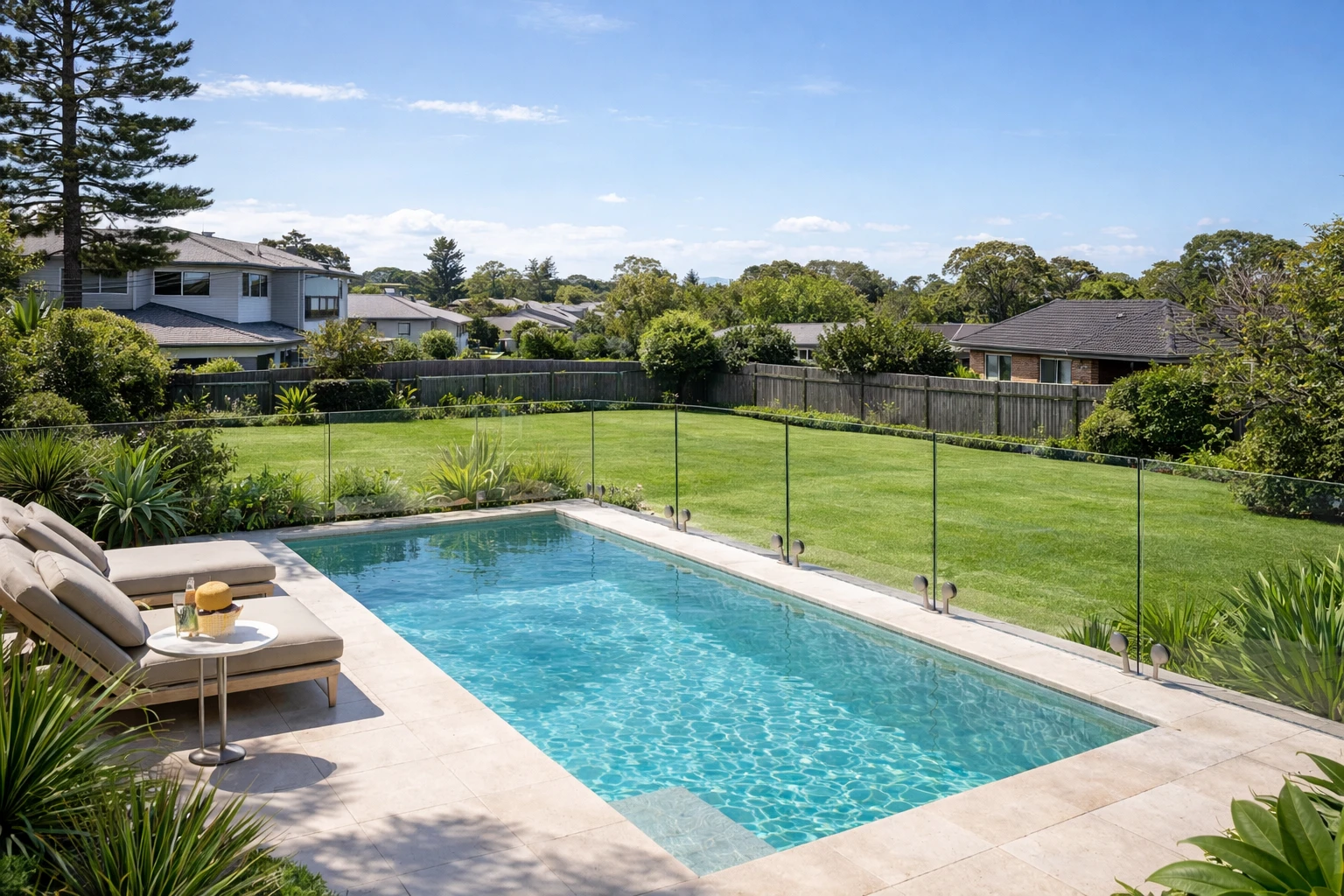
Frameless glass pool fencing is one of the most reliable options for coastal homes. Glass does not corrode and performs exceptionally well when installed correctly in wind-exposed areas.
Key benefits include:
Glass fencing also avoids many of the long-term issues associated with metal railings and framed systems.
Toughened Safety Glass and Australian Standards
Australian pool fencing regulations require toughened safety glass. This glass is engineered to:
For coastal installations, panel thickness and the quality of fixings are especially important to ensure long-term performance.
Stainless steel is commonly used for posts, spigots and handrails, but coastal conditions demand higher-grade materials.
316 marine-grade stainless steel is the preferred choice because it offers:
Many homeowners are surprised to see corrosion appear within just a few years when lower-grade stainless steel is used near the coast.
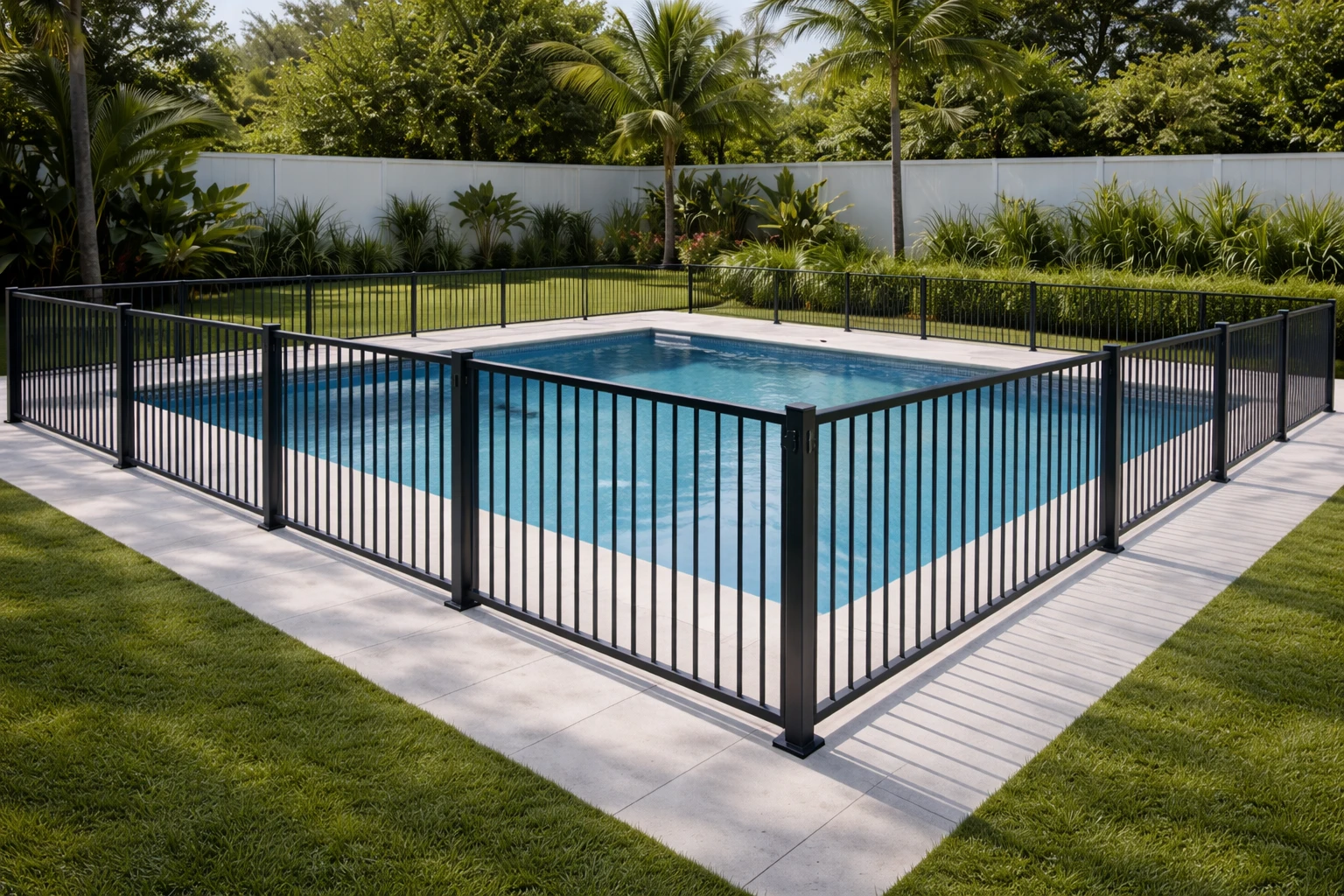
Powder-coated aluminium fencing remains a popular option for coastal homes due to its lightweight nature and clean appearance.
Aluminium performs best when:
While aluminium does not rust, damaged coatings can expose the metal beneath and lead to deterioration if not addressed early.
Even the best materials will underperform without proper installation and ongoing maintenance. Coastal conditions require a higher standard of workmanship and care from the outset.
Wind-exposed locations require stronger anchoring methods than standard residential installations. Shallow footings or poor-quality fixings can lead to gradual movement and structural issues over time.
Key installation considerations include:
Experienced installers assess site conditions carefully before determining the most appropriate anchoring solution.
Preventative maintenance plays a major role in extending the lifespan of coastal pool fencing.
Recommended practices include:
These simple steps can significantly reduce long-term maintenance costs while keeping the fence compliant.
Local experience matters when installing pool fencing near the coast. Installers unfamiliar with coastal environments may underestimate wind loads or material requirements.
An experienced coastal installer will:
For homeowners investing in pool fencing in Newcastle and surrounding coastal areas, working with a specialist makes a noticeable difference to long-term performance.
Coastal living demands pool fencing solutions that can handle far more than everyday wear and tear. By choosing corrosion-resistant materials, prioritising wind stability and investing in professional installation, homeowners can create a safer and longer-lasting pool area. At Lake Macquarie Fencing, our focus is on delivering compliant, durable pool fencing solutions designed specifically for coastal environments, giving homeowners confidence that their fence will continue to perform reliably for years to come.