


Common Glass Pool Fencing Issues and How to Prevent Costly Repairs
December 16, 2025

Glass pool fencing is a popular choice for Australian homes because it offers safety without compromising views or design. However, like any outdoor structure, it isn’t immune to wear and tear. For homeowners with glass pool fencing in Newcastle, environmental exposure, frequent use and overlooked maintenance can gradually turn minor issues into costly repairs. At Lake Macquarie Fencing, we regularly inspect and repair glass pool fences and often find that most major failures begin as small, easily fixable problems.
Knowing what to look for and acting before issues worsen allows homeowners to address problems early, avoid unnecessary repairs and ensure their pool fencing remains safe and compliant year-round.
Many glass pool fencing problems don’t happen overnight. They develop slowly through everyday use, weather exposure and subtle movement in surrounding surfaces. Because the fence may still appear intact, homeowners often overlook early indicators that something isn’t right. Recognising these warning signs early allows you to intervene before safety, compliance or structural integrity is compromised.
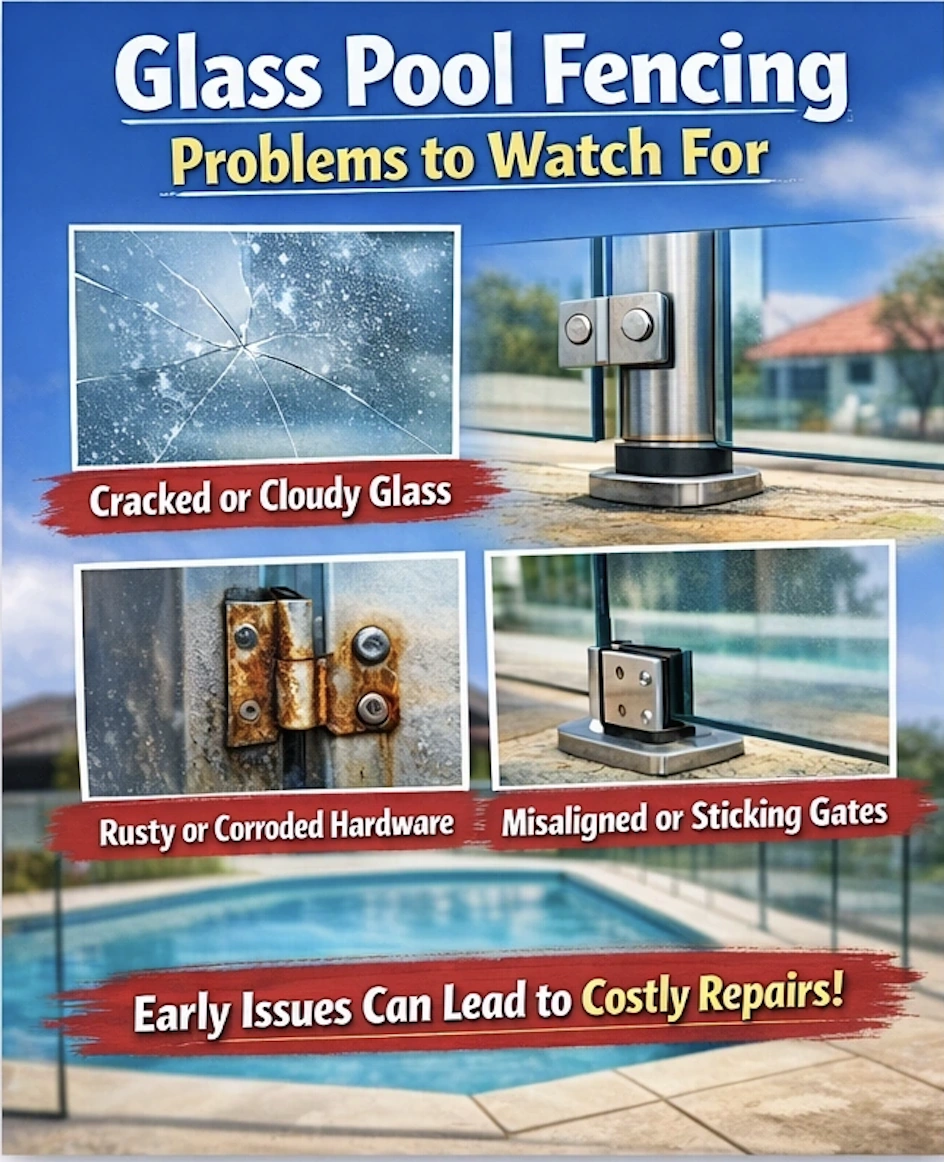
Glass panels are strong, but they are not indestructible. Small chips, hairline cracks or cloudy patches often indicate underlying stress or surface damage that can worsen if ignored. These issues may result from impact, ground movement, chemical exposure or improper cleaning techniques. While minor cosmetic issues may seem harmless, cracks can weaken structural integrity and cloudy glass can indicate surface etching that reduces long-term durability. Early signs to watch for include:
Stability is essential in glass pool fencing. If panels feel loose or gates don’t swing smoothly, it’s a sign that fixings have shifted or worn over time. Ground settlement, vibration and repeated gate use can all contribute to gradual movement. If left unaddressed, even minor movement can place added stress on panels and gates, increasing the risk of compliance failures in high-use pool areas. Common warning signs include:
In coastal regions like Newcastle and Lake Macquarie, salt air accelerates corrosion on metal components. Even stainless steel hardware can degrade if it’s not marine-grade or properly maintained. Left untreated, corrosion weakens hardware, compromises safety and can lead to complete component failure. Here are some signs of corrosion you need to be aware of:
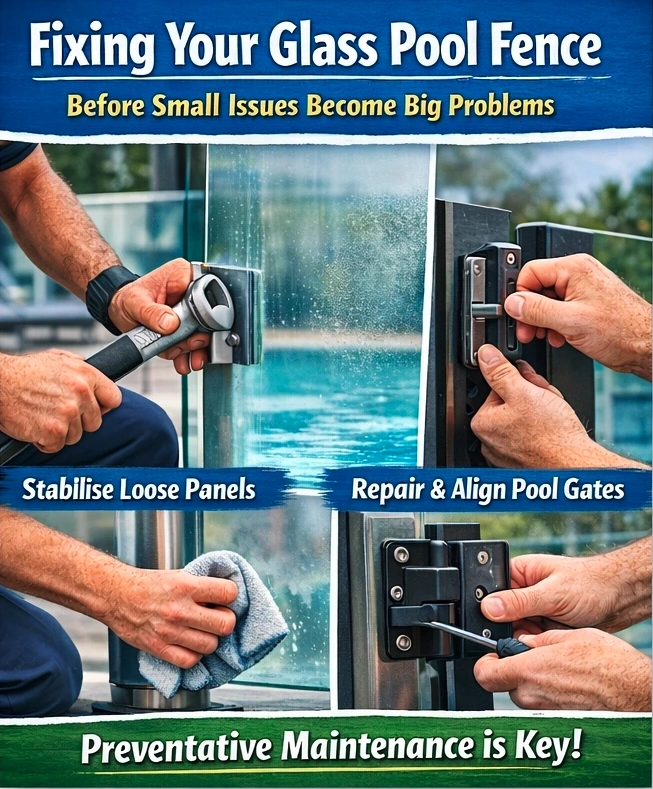
Once glass pool fencing issues have been identified, taking timely action is critical to restoring safety, appearance and regulatory compliance. While visible movement, cloudy panels or faulty gates can be concerning, most glass pool fencing issues can be resolved with targeted repairs when addressed early, avoiding unnecessary replacements and costs.
Loose or unstable glass panels can be alarming, but they rarely indicate a fault in the glass itself. In most cases, movement occurs due to worn fixings, shifting substrates or hardware that is no longer suited to the conditions it’s exposed to. Addressing panel movement early restores stability and reduces unnecessary stress on the glass, helping maintain long-term safety and compliance. Addressing panel instability early helps restore structural integrity and prevents further deterioration. Effective repair solutions may have:
Cloudy or marked glass panels are a common concern for pool owners, particularly in areas exposed to hard water, salt air or improper cleaning products. While these marks can detract from the clean, open look that glass fencing is designed to provide, they don’t always mean the glass needs to be replaced. In many cases, surface damage can be treated or minimised through professional restoration, improving both appearance and longevity. Restoration options can include these factors:
Pool fence gates are subjected to more frequent use and mechanical stress than any other part of the fencing system, making them prone to misalignment and wear. Even small changes in hinge position or latch tension can affect how reliably a gate self-closes and self-latches, both of which are mandatory under pool safety standards. Regular adjustments and timely repairs are essential to maintaining both safety and legal compliance. Practise these common fixes:
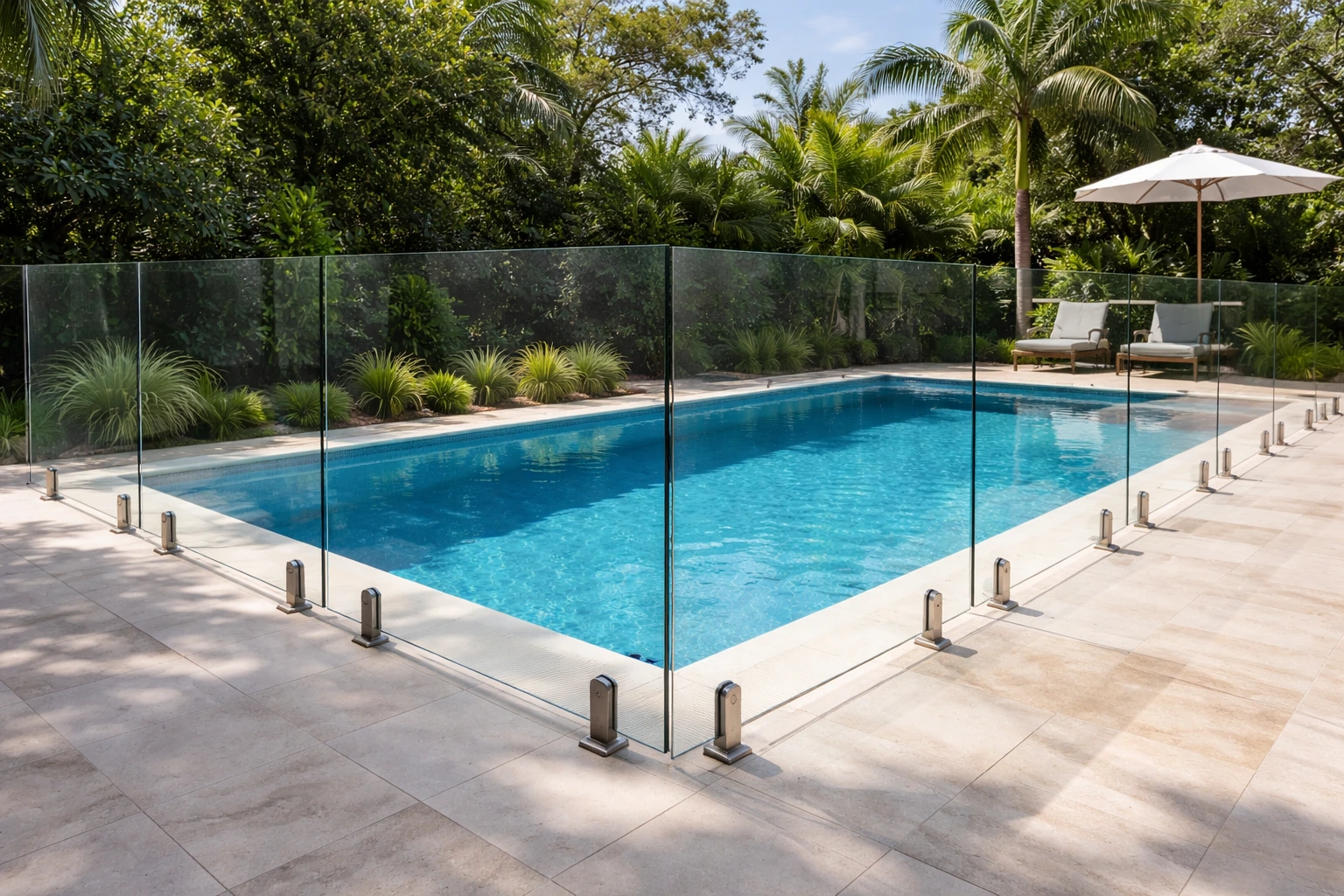
Preventative care reduces the likelihood of unexpected repairs, extends the lifespan of your fence and helps homeowners stay ahead of compliance requirements. By taking a proactive approach, homeowners can extend the lifespan of their fence, maintain safety standards and avoid unexpected repair costs or compliance problems.
Australian conditions place unique demands on glass pool fencing hardware. Salt air, UV radiation, temperature fluctuations and moisture can quickly degrade low-quality materials, even if they appear suitable at installation. Choosing the right hardware from the outset is one of the most important decisions homeowners can make to prevent premature wear and structural issues. Consider the following:
Even high-quality glass and hardware can deteriorate prematurely if they are cleaned incorrectly or neglected altogether. Many homeowners unknowingly cause damage by using harsh chemicals, abrasive pads or unsuitable cleaning products that strip protective finishes and accelerate corrosion. A consistent, gentle cleaning routine helps preserve the visual clarity of the glass and the integrity of the fixings that hold it in place. Best practice maintenance includes:
Glass pool fencing is not only a visual feature but also a critical safety barrier, and regular checks are essential to ensure it continues to meet safety regulations and protocols. Movement, wear and mechanical fatigue can develop gradually, making issues easy to miss without deliberate inspection. This is important for families with young children or properties that are rented or sold, where compliance is routinely assessed. A simple safety check should assess:
From our experience working with glass pool fencing every day, issues are far easier and more cost-effective to resolve when identified early, before safety or compliance is affected. When these warning signs are addressed early, repairs are usually straightforward, affordable and far less disruptive than full replacements. Taking a proactive approach protects more than just the fence itself. If you’re unsure about the condition or compliance of your glass pool fence, get in touch with our team today. We offer honest advice, practical solutions and professional repairs designed for local conditions, so you can enjoy your pool area with confidence. Book a professional inspection or repair assessment with us here at Lake Macquarie Fencing.