


Newcastle Pool Fencing Laws and Compliance Guide
February 18, 2026

Pool owners in Newcastle face a unique mix of state legislation and council-specific requirements that can be confusing and costly if misunderstood. In this article, Lake Macquarie Fencing explores how NSW pool safety laws apply in the Newcastle area and how local council rules influence the design, location and approval of compliant pool barriers. Readers will gain clarity on what the law actually requires for pool fencing, including height and climbable zone rules, gate and latch standards and boundary fence considerations.
Understanding these obligations is not just about avoiding fines or council notices. Effective pool fencing is one of the most critical protections against drowning incidents, particularly for young children and visitors who are unfamiliar with a property. By the end of this overview readers will understand the key legal responsibilities for pool fencing in Newcastle, common compliance pitfalls that lead to failed inspections and the practical steps involved in designing, installing or modifying fencing so that it aligns with current standards.
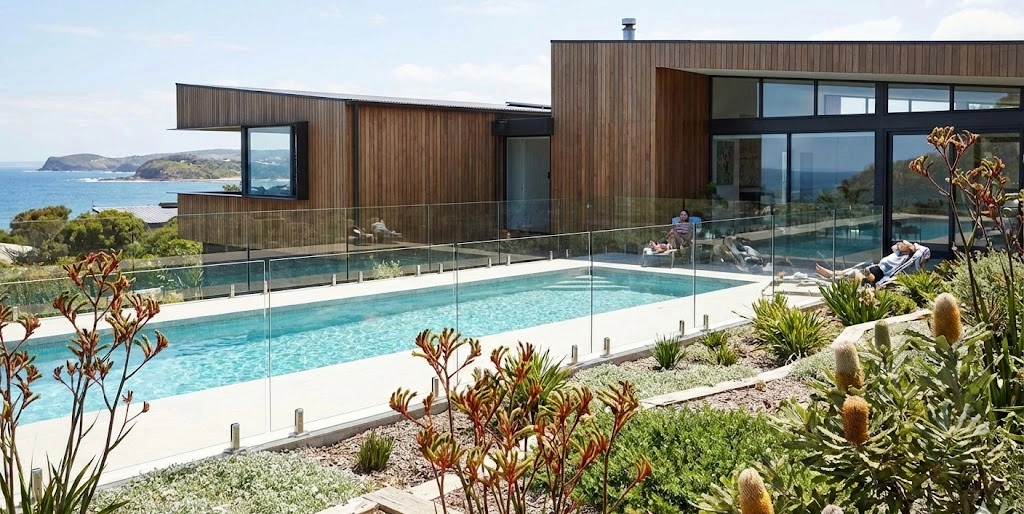
Pool fencing laws in Newcastle are not just red tape. They are specific safety rules designed to stop children from accessing pools unsupervised and to reduce the risk of drowning. Anyone with a backyard or shared pool in Newcastle or Lake Macquarie must understand that these laws are enforced under NSW legislation and supported by local council requirements.
For homeowners, landlords and strata bodies, compliance affects more than safety. It also impacts insurance cover, property sales, rental approvals and potential fines. Professional pool fencing installers help clients design and install fencing that meets both NSW and Newcastle council standards so they avoid costly problems later.
The primary reason pool fencing laws exist is child safety. Most backyard drownings in Australia involve children under five who access a pool when adults are distracted or think the child is elsewhere. A compliant fence with a self-closing, self-latching gate creates a physical barrier that slows a child down and gives adults time to intervene.
In practical terms this means a pool fence in Newcastle must meet specific height, gap and climbability rules under the NSW Swimming Pools Act and Australian Standard AS 1926.1. For example, the fence must generally be at least 1.2 metres high with no gaps larger than 100 mm and no climbable objects like furniture or planter boxes near the outside of the fence.
Pool owners in Newcastle and Lake Macquarie have a clear legal duty to keep their pool barriers compliant at all times, not just at installation. Newcastle City Council and Lake Macquarie City Council both conduct inspections, particularly for properties being sold or leased and for pools registered as needing certification.
If a fence is found non-compliant, the owner can receive:
Non-compliance can also delay a property sale because a valid certificate of compliance or non-compliance must be attached to the contract in NSW. For investors, a non-compliant pool can prevent a property from being legally leased until issues are rectified. Licensed pool fence contractors assist owners to interpret inspection reports and carry out compliant upgrades so these delays and penalties are avoided.
Pool fencing compliance in Newcastle also affects liability. If a child is injured or drowns and the pool barrier is defective or does not meet current standards, the owner may face significant legal exposure. Insurers can reduce or refuse a claim if relevant safety laws were not followed.
By installing and maintaining compliant pool fencing, owners protect themselves as well as visitors, neighbours and tenants. They know their barrier aligns with current NSW and Newcastle requirements and that regular checks for gate operation, fence damage and climbable objects keep their backyard pool as safe as possible.
Every backyard pool in Newcastle must comply with the NSW Swimming Pools Act 1992 and Swimming Pools Regulation 2018. These laws set out strict safety standards for barriers, gates and the area around the pool, regardless of whether the property is in Newcastle or Lake Macquarie. Non‑compliance can lead to fines, difficulty selling or leasing and, most importantly, a higher risk of accidents.
Professional pool installers help homeowners interpret these rules on real properties, because the details can change depending on when the pool was built, where it sits on the block and whether the house is used as a rental or owner‑occupied. The key requirements below apply to most residential pools and spa pools that are deeper than 300 mm.
NSW law requires a pool barrier that is at least 1200 mm high, measured from the finished ground level outside the pool area. There must be no gaps greater than 100 mm anywhere in the barrier, including under the fence and between vertical members, so small children cannot squeeze through.
The barrier must be rigid and sturdy enough to resist a child forcing it open or breaking through. For typical steel or aluminium pool fencing, this means vertical bars with no horizontal rails in the climbable zone on the outside.
A 900 mm non‑climbable zone is required on the outside of the fence. Within this zone there must be no climbable objects such as garden beds, retaining walls, trees, furniture or lattice. Licensed pool fence installers often help homeowners adjust landscaping or move fixtures that accidentally fall inside this zone.
Pool gates must be self‑closing and self‑latching from any open position. After normal use the gate must swing shut on its own without needing to be pulled, and the latch must engage automatically so the gate cannot be pushed open.
The gate must open away from the pool area, not towards it. The latch release must be at least 1500 mm above finished ground level or positioned inside the gate so it can only be reached by reaching over or through a compliant gap. This stops young children operating the latch.
For most Newcastle homes direct access to the pool from the house via doors is no longer permitted for new pools. Access should be through a compliant gate in the pool fence, not from sliding or hinged doors opening directly into the pool area.
Windows that open into the pool area must either be permanently restricted to a 100 mm maximum opening or fitted with securely fixed security screens. The area around the barrier must be kept clear of climbable items such as barbeques, pot plants, storage boxes or play equipment that could allow a child to scale the fence.
In Newcastle and Lake Macquarie, not every new pool fence needs a full development application, but many projects still require council involvement. Homeowners often assume they can simply install a barrier as they wish. In reality, there are clear situations where approval, certification or at least prior confirmation from the council or a private certifier is needed.
Pool fencing is closely tied to both the pool’s approval and the safety rules in the Swimming Pools Act 1992 and Australian Standard AS 1926. Before starting any fencing work, it is critical to understand when standard exempt rules apply and when council consent is triggered.
Whenever a new swimming pool or spa is being installed in Newcastle or Lake Macquarie, the pool fence is considered part of that project. A new pool almost always needs either a development application lodged with the council or a complying development certificate issued by a private certifier. As part of that approval, the proposed fencing layout, heights, gates and boundary treatments are assessed.
Council involvement may also be required where a homeowner significantly alters an existing pool area. Examples include extending the pool shell, adding a raised deck around the pool or reconfiguring the yard so that doors, windows or boundary lines affect the pool enclosure.
Boundary fences that form part of the pool barrier are a common trigger for council scrutiny. If a boundary fence in Newcastle or Lake Macquarie is being replaced or increased in height and it also serves as a pool fence, it must meet pool barrier standards, not just standard dividing fence rules.
Approval or certification may be required where:
Where a pool fence relies on a neighbour’s structure, such as a garage wall or shed forming part of the barrier, a certifier will generally need to confirm that the combined arrangement is compliant.
Some sites in Newcastle and Lake Macquarie sit within conservation areas, heritage‑listed properties or bushfire‑prone land. On these blocks, even relatively minor works such as installing or altering pool fencing may trigger a need for council consent.
Heritage controls can limit the height, style and location of fences visible from the street or affecting the character of an older dwelling. In bushfire‑prone areas, councils and certifiers may require specific non‑combustible materials or particular gate hardware to meet bushfire construction standards alongside pool safety rules.
To avoid non‑compliant work and costly changes later, Lake Macquarie Fencing encourages owners to check with the council, or an accredited certifier before committing to any pool fencing that goes beyond a like‑for‑like repair.
Many Newcastle homeowners are surprised to find their pool barrier does not comply, even when the fence looks solid and new. Most issues come from small details that are easy to overlook but are treated very seriously under NSW pool safety laws.
Professional pool fence installers often see the same mistakes repeated across properties in Newcastle and Lake Macquarie. Understanding these common problems helps owners fix risks early and avoid failed inspections or council penalties.
One of the biggest issues is fences that are simply the wrong size. In most residential situations in Newcastle, the pool fence must be at least 1.2 metres high, measured from the finished ground level on the outside. Over time garden beds, topped up with soil or new paving can effectively reduce the measured height.
The space between the bottom of the fence and the ground must not exceed 100 millimetres. Vertical gaps between fence panels and posts must also be less than 100 millimetres. With frameless or semi-frameless glass fencing, owners sometimes forget that any spacer or misaligned panel that opens up a gap can cause a failure.
Regulations require a clear non-climbing zone of 900 millimetres on the outside of the pool fence. Many non-compliant fences technically meet height rules but fail because of climbable items nearby.
Common problems include outdoor furniture, barbeques, pot plants, storage boxes, trees, lattice screens and horizontal rails or bracing within the 900-millimetre zone. Children can use these as steps to get over the barrier. Even features like retaining walls or raised garden edges besides the fence can reduce the effective fence height from the climbing side.
Pool gates are a frequent cause of failed inspections. Gates must:
Over time hinges wear, springs weaken or paving shifts, which stops a gate from closing fully. Many owners adjust the gate for convenience so it closes more gently, but this can prevent reliable self-closing. Licensed pool fence installers often replace hinges to restore compliance.
Latch height is another frequent issue. The latch must be at least 1.5 metres above finished ground level or otherwise shielded so a small child cannot reach it or reach through the fence to open it. Adding steps, garden beds or movable items near the latch area can unintentionally bring it within reach, which inspectors will treat as non-compliant.
Pool owners in Newcastle must have their pool barrier inspected and certified as compliant with NSW pool safety laws. This applies to backyard pools and spas that can hold more than 2,000 litres. Understanding how inspections, certificates and ongoing compliance work help owners avoid fines and keep their pools legally open for use.
Licensed pool fence installers regularly work alongside council and private certifiers, so we design and build pool fences that pass inspection the first time. The process is straightforward once owners know who inspects what, when inspections are required and what happens if a fence fails.
Pool barrier inspections in Newcastle are carried out by either Newcastle City Council officers or accredited private certifiers registered with NSW Fair Trading. Owners can choose which they prefer, as long as the inspector is appropriately accredited.
Inspections are required in several common situations:
In strata or community title properties the owners corporation is usually responsible for organising inspections and holding the certificate.
Inspectors assess the pool barrier against the Swimming Pools Act 1992, the Swimming Pools Regulation 2018 and the relevant Australian Standards. They do not just look at the fence height but at the entire barrier system and surrounds.
Typical checks include:
Pool installers design pool fences with these detailed requirements in mind so there are no surprises on inspection day.
If the barrier complies, the inspector issues a Certificate of Compliance. This is recorded on the NSW Swimming Pool Register and is generally valid for three years, provided no changes are made that affect compliance.
If the fence fails, the inspector issues a written report listing the defects and a timeframe to fix them. For serious safety risks the council may issue notices or fines. For less critical issues owners are usually given time to rectify and book a re‑inspection.
Licensed pool fencers can use the defect report as a checklist and carry out only the changes needed to bring the barrier up to standard. Once the rectification work is complete, the owner arranges a follow‑up inspection so the certificate can be issued and the pool can be lawfully used or marketed for sale or lease.
Once a pool fence in Newcastle is approved and installed, the legal responsibility does not end. Owners must keep the barrier in safe working order at all times or risk fines and, in serious cases, liability if an incident occurs. Ongoing checks and prompt repairs are just as important as getting the original approval right.
Licensed local pool fencing installers help clients choose durable materials and compliant layouts, but only the owner or occupier can ensure the pool area stays safe day to day. Understanding what to watch for and how often to inspect the fence is essential to long-term compliance.
Pool fences should be visually checked at least every few weeks and more often if there are children on the property. Newcastle’s coastal climate can accelerate rust and corrosion, especially on metal fittings, so hardware needs close attention.
Owners should walk the full perimeter of the barrier and look for:
Any change that creates a gap over 100 mm under or between panels or reduces the fence height below 1.2 m can put the barrier out of compliance. Lake Macquarie Fencing recommends recording inspection dates and notes so it is easy to show a council inspector that the fence is being monitored.
Most compliance failures in Newcastle occur at the gate rather than the fence panels. The gate must always self-close and self-latch from any open position without needing to be pulled shut.
Owners should routinely test that:
The area around the fence is just as important as the structure. Furniture, pot plants, barbeques, storage boxes and even large toys can act as climb points. These must be kept at least 900 mm away from the outside of the fence. Garden beds or mulch piled up against the base can also raise ground level so the effective fence height drops below the legal minimum.
Any damage or malfunction must be repaired immediately, not left for the next season. If a hinge breaks or a panel comes loose, the pool area should be treated as non-compliant and children should be kept away until it is fixed. If owners plan to renovate around the pool, such as adding decking, new paving or landscaping, they should check whether the work will alter fence height, ground levels or clearances. In some cases a new council inspection or certificate may be required, particularly when structural changes are made.
In the end, pool fencing compliance in Newcastle and the Lake Macquarie region is not just a box-ticking exercise; it is about protecting families, meeting clear legal obligations and adding long-term value to a property. The council rules, Australian Standards (AS 1926) and NSW Swimming Pools Act all work together to define how high a fence must be, how gates should operate, what clearances are allowed and how non‑climbable zones and boundary fences must be treated. When these details are overlooked, owners risk fines, failed compliance certificates, forced rectification work and, most importantly, an increased risk to children around water. When they are done correctly from the start, the pool area becomes safer, inspections are straightforward, approvals are faster and maintenance over the life of the fence is easier and cheaper.
With the right planning and advice, it is entirely possible to create a pool fence that is council‑approved, child‑safe, durable and visually appealing and to maintain that standard for many years after the initial build.