


Who Pays for a Boundary Fence Between Neighbours in NSW?
August 27, 2026

When a boundary fence needs repair or replacement, one of the first questions neighbours ask is who should pay. In NSW, the answer is not always as simple as splitting the cost equally. The Dividing Fences Act 1991 (NSW) sets out rules for shared responsibility, fencing notices and what qualifies as a “sufficient dividing fence”.
Lake Macquarie Fencing helps property owners navigate the practical considerations involved in repairing or replacing boundary fences, including choosing an appropriate style, height and cost.
For homeowners considering fencing in Newcastle, understanding these responsibilities before work begins can help prevent disputes and ensure the fence is suitable, compliant and fairly funded.
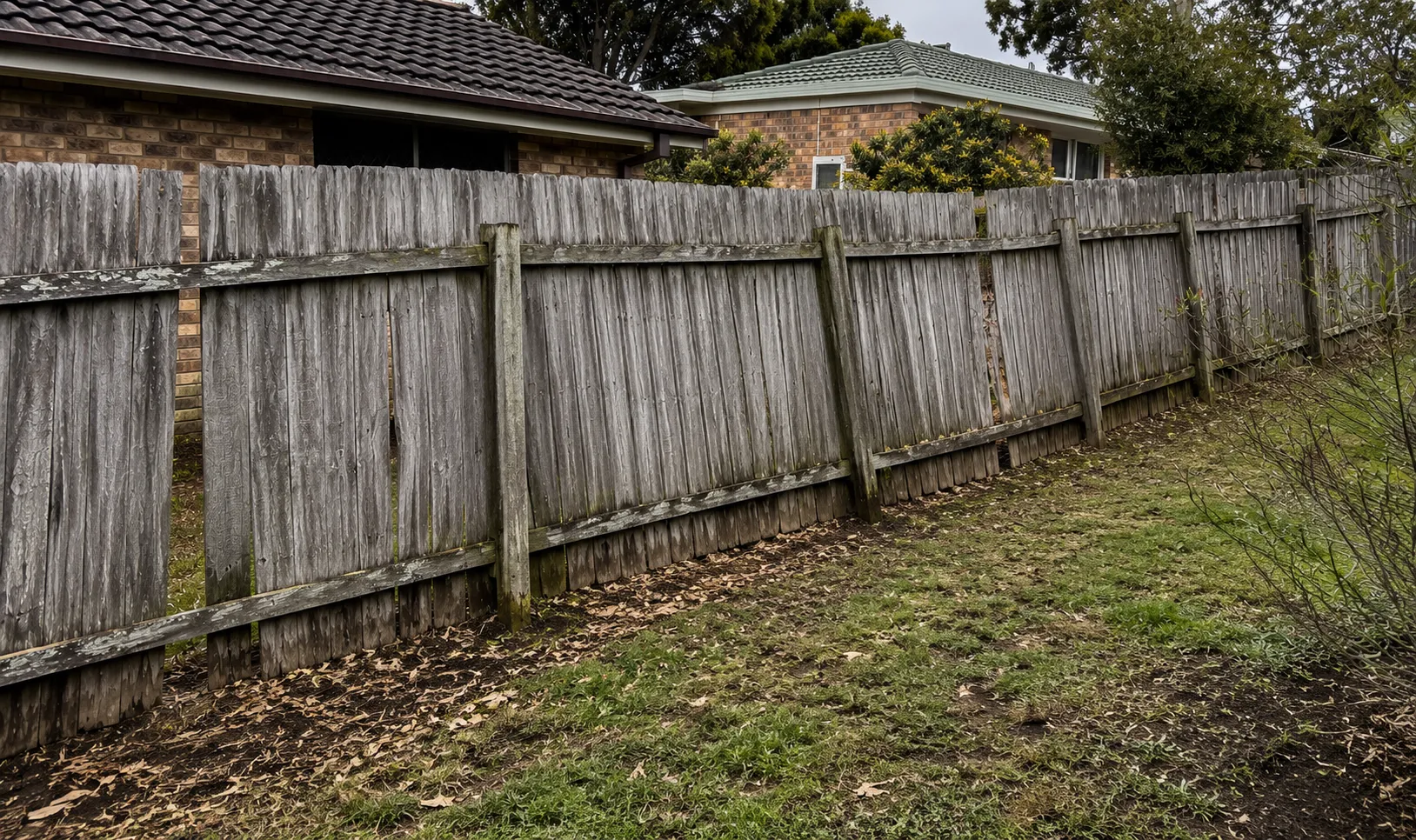
Under the Dividing Fences Act 1991 (NSW), a “sufficient dividing fence” is a fence that is reasonably adequate for separating adjoining properties in the circumstances. There is no single height, material or design that applies to every property. What is sufficient can depend on the type and use of the land, local fencing standards and relevant council requirements.
Legal Aid NSW provides further guidance on what constitutes a sufficient dividing fence, including the relevance of land use, privacy, surrounding fences and council requirements.
For many suburban properties, standard timber paling or Colorbond fencing may be appropriate. Rural properties may require a different solution, such as post-and-wire or rural mesh fencing, particularly where the fence needs to contain animals.
The condition of an existing fence is also relevant. A fence that is leaning, badly rusted, rotting, missing sections or no longer provides reasonable separation may need to be repaired or replaced.
Neighbours should consider:
A fence around 1.8 metres is common for many residential side and rear boundaries, but this is not a universal requirement. The appropriate height depends on the property and applicable planning controls.
A sufficient fence also does not necessarily mean the cheapest option. It is the fence that is reasonably appropriate for the circumstances. If one owner wants greater height, premium materials or decorative features beyond that standard, they may need to cover the additional cost unless both neighbours agree otherwise.
The Dividing Fences Act 1991 (NSW) sets out how adjoining owners share responsibility for building, repairing or replacing a dividing fence. Generally, neighbours contribute to the reasonable cost of a sufficient dividing fence rather than one owner automatically paying the entire amount.
The shared responsibility does not mean neighbours have to agree to every material, height or design. If one owner wants a fence that is more expensive than what is reasonably sufficient, they may need to cover the additional cost. Different cost arrangements can also apply where damage was caused by one owner or someone for whom they are responsible.
A neighbour seeking a contribution should serve a fencing notice before carrying out the proposed work. The notice should identify the proposed boundary line, type of fencing work and estimated cost. The owner serving it can also propose how the cost will be divided.
Neighbours can then discuss the proposal, compare quotes and try to reach an agreement before construction begins.
The appropriate fence will depend on the properties, local conditions and applicable council requirements. Homeowners should check relevant planning controls before construction, where a fence is unusually high, close to a road or affected by other site conditions.
Property owners should also review the NSW exempt development standards for fences, which cover matters such as height, materials, road setbacks and different land-use zones.
If one neighbour wants a more expensive or elaborate fence than is reasonably required, the additional cost should be discussed before work begins.
If the neighbours cannot agree, the formal dispute-resolution process may be used. Keeping copies of fencing notices, quotes, photographs and correspondence can be useful if the matter progresses further.
Yes. The location of the legal boundary can affect whether a fence is considered a dividing fence and whether the usual cost-sharing rules apply. An existing fence does not necessarily mark the exact legal boundary, so its position should be confirmed if there is any genuine uncertainty.
If a fence has been built entirely within one property for that owner's private use, it may not be treated in the same way as a shared dividing fence. Likewise, if the proposed replacement will be moved from the existing position, neighbours should agree on the new location before work starts.
Neighbours should avoid relying on an old fence, visual markers or assumptions where the boundary is genuinely disputed. Existing survey information may help, but a registered surveyor may be needed to establish the legal boundary.
The NSW legislation also provides a process for defining a disputed common boundary for fencing purposes.
Confirming the boundary before obtaining a final quote helps owners understand where the fence should be built and what work they are agreeing to fund.
If one neighbour wants a fence that is higher, more decorative or made from more expensive materials than what would normally be considered a sufficient dividing fence, they will need to cover the additional cost unless both owners agree otherwise.
Examples of potential upgrades include:
If both neighbours agree to the upgraded design, they can agree on how the additional cost will be shared. The arrangement should be recorded in writing before work begins.
When an existing dividing fence is no longer sufficient, neighbouring owners will share the reasonable cost of the necessary repair or replacement. The usual starting point is an equal contribution, although the circumstances can result in a different allocation.
For example, a neighbour may need to pay more where they have caused damage or where they request an upgrade beyond what is reasonably required.
Before work begins, neighbours should discuss the proposed repairs or replacement where a contribution is being sought. Itemised quotes can help parties understand what work is necessary and separate standard fencing from optional improvements.
A neighbour should not carry out shared fencing work and then assume the other owner must pay half the cost. An owner seeking a contribution can serve a fencing notice specifying the proposed work and estimated cost. An adjoining owner is not liable for fencing work carried out before the required notice, subject to limited exceptions such as urgent fencing work.
If work has already started without proper consultation, the other owner should not automatically assume they are responsible for half of the amount spent. It is useful to keep copies of photographs, quotes, notices, invoices and other communications.
Where the disagreement cannot be resolved, the appropriate legal process can determine the fencing work and how the costs should be divided.
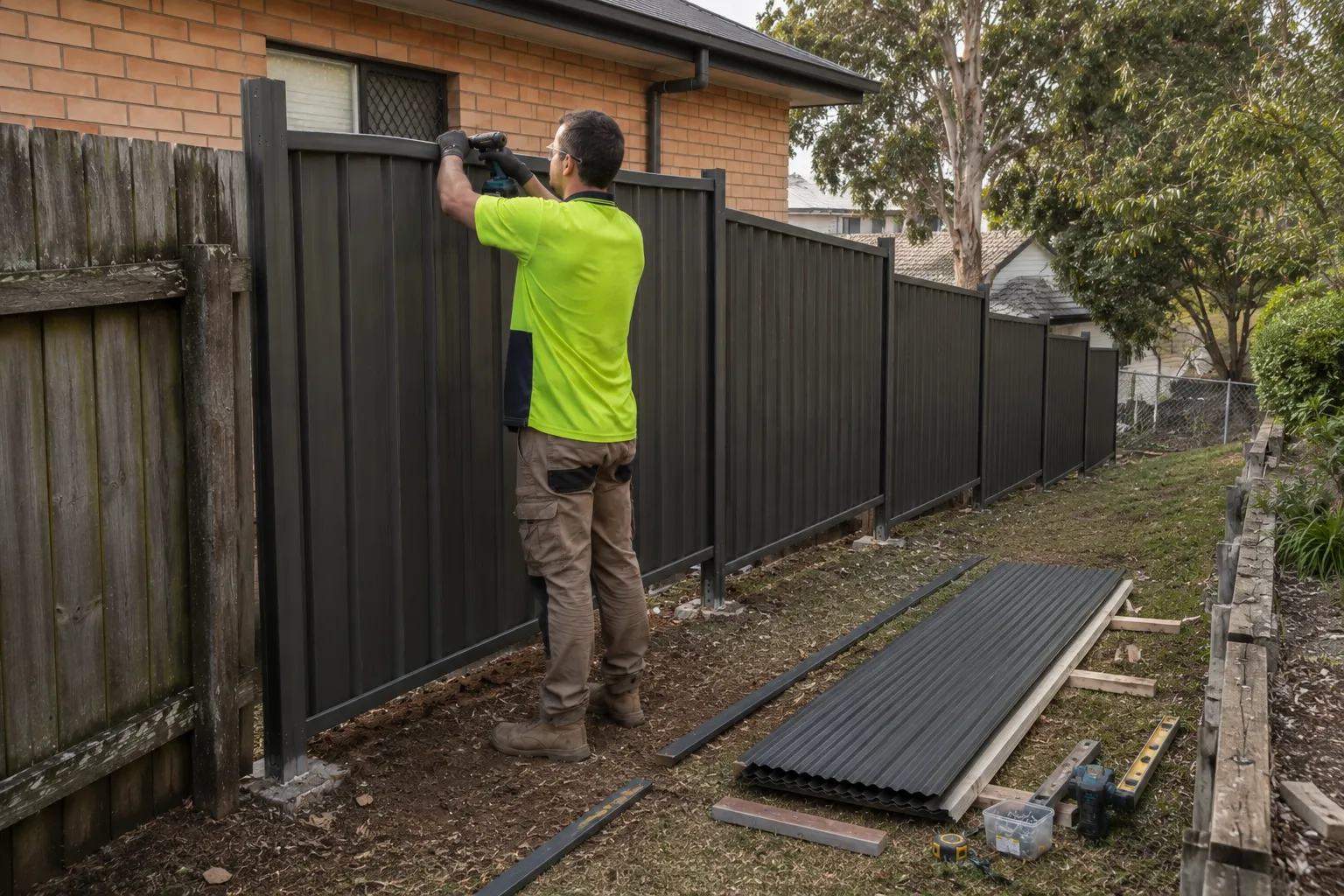
The cost of a dividing fence depends on more than the material alone. Boundary length, height, site conditions, access and additional work can all affect the final price. Comparing itemised quotes based on the same specifications can help neighbours understand the costs and identify optional upgrades.
A longer boundary requires more materials and labour. Increasing the height can also increase material requirements and affect installation.
Timber paling and basic Colorbond fencing may be more economical than hardwood, decorative steel, composite or masonry options. Custom features and premium finishes can also increase the price.
Sloping or uneven ground, difficult soil, narrow access, gardens, retaining walls and structures close to the boundary can increase preparation and installation costs.
Demolition and disposal of an old fence can add to the project cost. Neighbours should check whether these services are included in the quote or charged separately.
Gates, privacy screens, retaining structures and other additions can increase the overall price. If they are not necessary for a sufficient dividing fence, the neighbour requesting them may need to cover the additional expense.
Obtaining two or more itemised quotes can help neighbours compare the same specifications rather than simply choosing the cheapest option. Quotes should clearly identify the fence type, height, length, materials, removal costs, GST and additional work.
Homeowners can also explore practical ways to reduce fencing costs without sacrificing quality, such as choosing durable materials, standard heights and a straightforward design.
This also makes it easier to separate the reasonable cost of a sufficient fence from optional upgrades before agreeing on each owner's contribution.
Yes, neighbours can agree on the type and height of a shared boundary fence, provided the proposed design complies with applicable council requirements. However, the shared obligation relates to a sufficient dividing fence. If one owner wants a taller or more expensive option, they may need to cover the additional cost unless both parties agree otherwise.
Before work begins, neighbours should confirm:
Putting these details in writing gives both owners a clear understanding of what is being built and what each party has agreed to pay.
A clear written agreement can help prevent disputes by confirming the fence location, design, cost and practical arrangements before construction starts.
Confirming the boundary, local requirements, materials and access arrangements can also help property owners avoid costly fence installation mistakes.
Neighbours should confirm:
If the boundary is uncertain, it should be clarified before construction.
The agreement should identify the chosen quote, total cost and each owner's contribution. It should also cover additional charges such as old fence removal, site preparation, gates or difficult access.
If one neighbour wants a more expensive fence than the sufficient standard, the additional cost should be clearly allocated before work begins.
Neighbours should also agree on:
Agreeing on these details beforehand reduces confusion and gives both parties a clear record of their responsibilities.
If neighbours cannot agree on a boundary fence, they should first try to resolve the issue through discussion and written communication. The Dividing Fences Act 1991 (NSW) provides a formal process for disputes about whether fencing work is required, what type of fence should be built and how the costs should be divided.
A fencing notice is the first formal step in the process. It should provide details like the proposed location, type of fencing work and estimated cost. The neighbour then has an opportunity to respond and negotiate an agreement.
Neighbours can also consider mediation through a Community Justice Centre before taking the dispute further.
If the neighbours still cannot agree one month after the fencing notice was served, either owner can apply to the Local Court or NSW Civil and Administrative Tribunal (NCAT) for a fencing order.
Depending on the circumstances, an order can determine:
Keeping the notice, quotes, photographs, correspondence and any relevant survey information can help provide evidence if the matter reaches the Local Court or NCAT.
If a dividing fence has been damaged or destroyed and urgent work is required, the Act allows urgent fencing work to be carried out without first serving a fencing notice where serving one is impracticable. The other owner can still be liable for a share of the reasonable cost, subject to the circumstances and the Act.
Understanding who pays for a boundary fence in NSW starts with knowing the requirements of the Dividing Fences Act 1991 and agreeing on what constitutes a sufficient fence. Clear communication, written quotes and an agreed cost split can help neighbours avoid unnecessary disputes.
For property owners, Lake Macquarie Fencing can provide practical guidance on suitable fencing options, pricing and installation. Taking the time to agree on the fence design, costs and responsibilities before work begins can help ensure the finished fence is appropriate, fairly funded and fit for purpose.