


Why Glass Pool Fences Fail Inspection in NSW (And How to Avoid It)
March 17, 2026

Most pool owners are surprised to learn how often glass pool fences fail inspection in NSW, even when the finished work looks neat and well built. In Newcastle and across the Hunter, many non-compliant fences come down to small details that do not meet strict NSW pool safety laws. Lake Macquarie Fencing sees these issues regularly during site visits. Common problems include incorrect fence heights, non-compliant gaps, climbable objects too close to the glass panels, gate latches installed at the wrong height and glass panels that have not been installed to the required standard.
This article explains why glass pool fences fail inspection in NSW and what can be done during design and installation to reduce the risk. It covers the key areas inspectors focus on under the NSW Swimming Pools Act and Australian Standards, how local site conditions can create hidden compliance problems and which mistakes during DIY or budget installations most often lead to failure. For pool owners considering glass pool fencing in Newcastle, understanding these issues early can help avoid costly rectification work and improve safety around the pool.
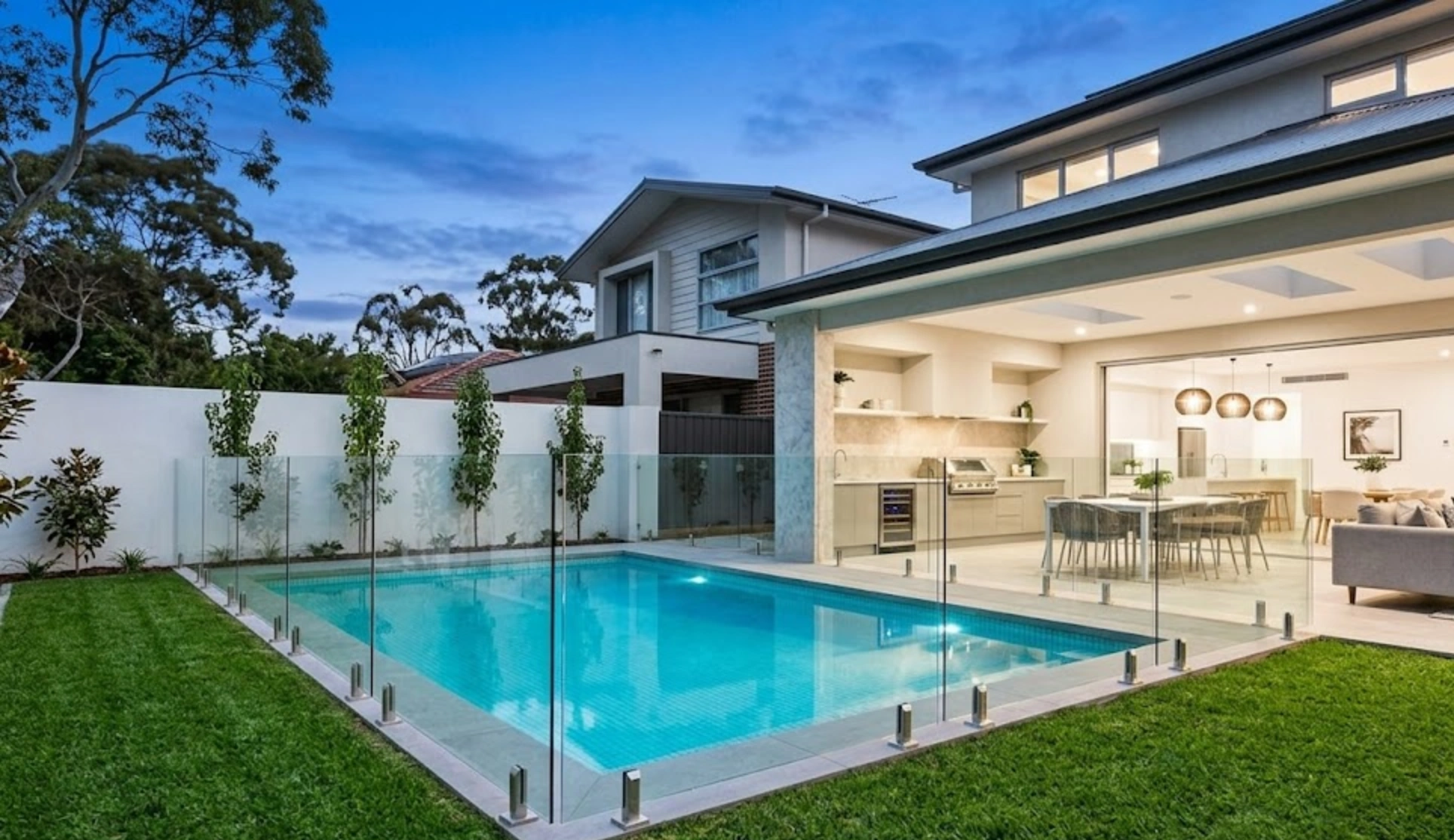
Licensed pool inspectors work through a checklist based on AS 1926.1 and NSW pool safety laws. For glass pool fences, they focus on barrier height, gaps, climbable objects, gate performance and the overall effectiveness of the pool barrier. Understanding these areas helps pool owners prepare before inspection and reduce the risk of a failed outcome.
Importantly, inspectors assess the entire barrier system, not just the glass panels. That includes gates, boundary fences, nearby structures, landscaping and anything else that could affect compliance or allow a child to gain access to the pool area.
Height, gaps and climbable objects are among the most common reasons glass pool fences fail inspection in NSW. Even when the fence looks neat and professionally installed, small measurement errors or nearby features can make the barrier non-compliant.
Inspectors check whether the fence maintains the required height, whether gaps under or around the glass are within the allowed limits and whether anything outside the barrier could help a child climb over it. These issues often appear around garden beds, retaining walls, paving edges, pool equipment and other features that may not have seemed like a problem during installation.
For most residential pools in NSW, the glass pool fence must be at least 1200 mm high, measured from the finished ground level on the outside of the barrier. Inspectors pay close attention to this around garden beds, paving, retaining walls and other areas where the ground level may have changed since the fence was installed.
Height problems often arise when landscaping or surface works are completed after installation. A fence that originally met the required height can become non-compliant if new turf, paving, decking or raised garden edging reduces the effective height of the barrier. Even a small change in finished ground level can be enough to trigger a failed inspection.
Gaps around the barrier are another common reason glass pool fences fail inspection. Inspectors look closely at the space under the panels and gate to make sure a small child cannot pass underneath or through the barrier.
Problems usually arise when:
These issues are easy to miss because the fence may still look straight and secure. In practice, though, even one enlarged gap can be enough to make the barrier non-compliant.
A glass pool fence can still fail inspection even when the panels and gaps are compliant if there are climbable objects too close to the outside of the barrier. Inspectors check the surrounding area carefully because nearby items can reduce the effectiveness of the fence and create a way for a child to climb over it.
Common examples include:
These issues often develop over time as the pool area changes. Something as simple as moving a bench or adding new landscaping can turn a compliant fence into a non-compliant one if it creates a foothold near the barrier.
Non-climbable zone and clearance problems are among the most common reasons glass pool fences fail inspection in NSW. Even when the panels and gate are installed correctly, nearby objects or changes in ground level can make the barrier non-compliant.
Inspectors look closely at the space around and under the fence to make sure children cannot use nearby features as steps or footholds and cannot pass underneath the barrier. These issues often appear after installation, especially when landscaping, paving or outdoor furniture changes the area around the fence.
The non-climbable zone, often shortened to NCZ, is the area around the pool barrier that must be kept free of objects a child could use as a step, foothold or handhold to climb over the fence.
For most new pools in NSW, this generally means:
Common problems within the NCZ include:
Even where the glass panels meet the required height, these nearby items can effectively turn the fence into a ladder. That is why the NCZ needs to be considered not just during installation, but whenever the area around the pool is changed.
Clearances around the barrier are just as important as the non-climbable zone. NSW pool barrier rules place strict limits on these gaps so a small child cannot pass under or through the fence.
Common clearance problems include:
These issues are particularly common where paving is replaced, garden beds are raised or the site settles over time. A fence that passed when first installed can still fail later if the clearances are no longer within the required limits.
Many glass pool fences become non-compliant not because the original installation was obviously wrong, but because the area around the barrier changes over time. Landscaping, paving and other surface works can alter clearances, create new footholds or reduce the effective height of the fence.
Common examples include:
These changes can seem minor on their own, but together they can affect whether the fence still meets the required standard. That is why the surrounding area should always be checked again after any site works are completed.
Gate and latching failures are among the most common reasons glass pool fences fail inspection in NSW. Even if the glass panels, heights and clearances are compliant, a gate that does not close and latch properly can still result in an immediate failure because it affects the safety of the entire barrier.
Inspectors check whether the gate opens away from the pool area, closes by itself from any open position and latches securely every time. If the gate sticks, drags, stops short or needs to be pushed to latch, it is likely to fail. Latch position is also important, as the release mechanism must not be easy for a child outside the barrier to reach or operate.
NSW pool gates must be self-closing and self-latching from any open position. During an inspection, the gate is usually tested from a range of angles to confirm that it swings shut and latches properly every time without needing to be pushed.
Common self-closing gate problems include:
These issues often develop gradually, which is why a gate that worked properly when first installed can fail later. Regular testing from different opening positions helps pick up problems before inspection.
A gate can still fail inspection even if it closes properly when the latch is positioned incorrectly. In NSW, the latch must be placed so a child outside the pool area cannot easily reach or operate the release mechanism.
Common latch placement problems include:
This is why latch position should be checked carefully after paving, landscaping and surrounding works are complete. Even small changes in finished ground level can affect whether the latch still sits at a compliant height and remains difficult to access from outside the barrier.
Inspectors also check whether the latch engages properly every time and whether the gate can be forced open without using the release mechanism. A gate may still fail even when the latch appears to work if the hardware is loose, misaligned or no longer securing the gate reliably.
Common hardware-related problems include:
Regularly checking fixings, cleaning away grime and replacing worn components before they fail can help avoid these issues. Pool gates rely heavily on the latch working exactly as intended, so even minor wear can become a compliance problem if it affects how securely the gate closes.
Some glass pool fences fail inspection not because of obvious height, gap or gate issues, but because the installation itself is not structurally sound. Even if the fence looks compliant at a glance, it can still fail if panels are loose, fixings are unsuitable or hardware has been installed incorrectly.
Inspectors may look for signs such as movement in the panels, loose spigots or posts, unstable gate hardware and fixings that appear worn or poorly secured. A compliant pool fence needs to do more than look neat. It must remain secure, stable and safe in normal use, with all components installed to suit both the product requirements and the site conditions.
Hardware and structural installation issues can affect whether a glass pool fence remains a reliable safety barrier. Even if the fence height, gaps and gate operation appear compliant, poor installation can still lead to failure if the fence is unstable or components are not properly secured.
Common issues include:
These problems are not always obvious from a distance, which is why the fence should be checked not just for appearance, but for how solid and secure it feels in normal use.
Even if the fence appears compliant visually, it can still fail if the panels are not fixed securely or show movement when pressure is applied. Glass pool fencing must remain stable in everyday use, and inspectors may raise concerns if the barrier feels loose, poorly supported or uneven.
Common structural fixing problems include:
On exposed sites, corrosion can also become a factor over time if the wrong grade of hardware has been used. If fixings begin to weaken or components start to move, the fence may no longer perform as a reliable safety barrier, even if it originally passed inspection.
A glass pool fence may pass inspection when first installed, then gradually develop problems as hardware wears and outdoor exposure takes its toll. Corrosion, loose fixings and worn moving parts can all affect how securely the fence performs over time.
Common issues include:
These problems are easy to overlook because they often happen slowly. Regular checks and timely maintenance are important to make sure the fence remains compliant and continues to function as a dependable safety barrier.
Most failed inspections come down to a small number of avoidable issues. Glass pool fences are more likely to pass the first time when the layout, measurements, hardware and surrounding finishes have all been considered properly before inspection.
The best approach is to review the fence as a complete barrier system rather than focusing only on the glass panels. That means checking the fence height, bottom gaps, gate operation, latch position, climbable objects and the surrounding ground levels together. A fence can look compliant at a glance but still fail if one detail has been overlooked.
Before any posts or spigots go into the ground, the fence layout needs to account for the legal clearances that apply to the pool barrier. External boundary fences that form part of the barrier must be at least 1.8 m high when measured from the pool side. Internal glass pool fences must be at least 1.2 m high, with no climbable objects located within the non-climbable zone.
Common layout problems include:
Planning the fence line carefully from the start helps avoid these issues. It is far easier to adjust the layout before installation than it is to correct clearance, climbability or height problems later.
Most failed inspections come back to a few key measurements and how the gate performs in practice. Before booking an inspection, it is worth checking the barrier closely rather than assuming it is compliant because it looks complete and secure.
The main points to check include:
These are the areas where small faults are most likely to be picked up. A slight height shortfall, a widened gap under one panel or a gate that only latches when pushed can all lead to failure, even if the rest of the fence appears compliant.
Using suitable hardware and completing the area around the fence before inspection are both important parts of compliance. Even a well-installed glass fence can run into problems if the hardware is not fit for purpose or if paving and landscaping are finished after the key measurements have already been set.
Common issues include:
Ground levels and surrounding surfaces should be finalised before inspection wherever possible. If works are completed afterward, the fence should be checked again to make sure the height, clearances and latch position still meet the required standard.
Many glass pool fences pass their first inspection, then develop compliance problems later because the area around them changes. A barrier that was originally compliant can become non-compliant if ground levels shift, landscaping is altered or new objects are placed too close to the fence.
To help reduce that risk, it is worth checking the following regularly:
Ongoing maintenance matters as much as the initial installation. Keeping the area around the fence clear and reviewing it after any site changes can greatly improve the chances of passing future inspections.
Glass pool fences in NSW often fail inspection because of the details around the barrier rather than the glass itself. Common problems include incorrect fence height, excessive gaps under the fence, climbable objects too close to the barrier, poorly positioned latches and gates that do not close and latch reliably.
For pool owners planning glass pool fencing in Newcastle, the best approach is to think about compliance from the start, use suitable hardware, keep surrounding areas clear and check the fence again after any landscaping or surface changes. A well-planned and well-maintained glass pool fence is more likely to pass inspection the first time and continue meeting safety requirements over the long term.