


Putting Your Pool Gate Where Everyday Life Needs It
October 26, 2026

A pool gate can look perfectly positioned on a drawing and still feel awkward every time it is used. Centring it along the glass fence might create a balanced appearance, but that position is not necessarily where people arrive from the house, collect towels or return to the outdoor dining area.
Consider the gate before finalising the panel arrangement when planning glass pool fencing. Lake Macquarie Fencing assesses how the proposed layout relates to everyday walking routes, nearby doors and outdoor furniture. Reviewing these details early helps identify potential access problems while ensuring that practical preferences do not compromise applicable pool barrier requirements.
Good pool gate placement starts with everyday routines rather than the midpoint of the fence. Weigh how people approach the enclosure, where they go after swimming and which backyard activities should remain separate from the pool area.
The most convenient position depends on the pool's location, the house's access points and the available space around the enclosure. A slightly different gate location may provide a more direct route without creating unnecessary detours or making other parts of the backyard harder to use.
Considering the overall pool fence layout can also help preserve usable space for walking, seating and other backyard activities.
Start with the door most commonly used to reach the backyard. It might be the entrance besides the outdoor dining area rather than the one closest to the pool on a floor plan. Placing the gate opposite the wrong exit can mean walking around the table or doubling back along the fence on every trip.

Picture the entire journey, from leaving the house and collecting towels to entering the pool area. Then think of the return trip, including where people dry off, put down their belongings or sit outside. A practical location should support these movements without requiring furniture to be shifted or other people to move out of the way.
Towel storage and drying areas also influence access. If towels are kept near the house, a gate at the opposite end of the pool could add unnecessary walking. If people usually stop outside the enclosure to dry off, the gate approach needs enough space for them to pause without obstructing someone entering or leaving.
When discussing glass pool fencing in Newcastle, explain these routines to the installer rather than requesting a gate in the centre of a fence run.
The pool is only one reason to use the backyard. People may move between the house, dining area and garden throughout the day, even when nobody is swimming. A well-planned fence layout should avoid making the pool enclosure a convenient shortcut for unrelated activities.
For example, a central gate might provide direct access from the house but encourage people to pass through the pool area on their way to another part of the garden. An alternative route outside the barrier may keep these activities separate, depending on the available space.
Clear glass can preserve views across the backyard, but visibility is not a substitute for active supervision around water. Gate placement should support convenient access while maintaining a suitable barrier and allowing the pool area to be supervised appropriately.
The gap between two glass panels is only part of the space required for a pool gate. Its operating movement, the approach from either side and the ability of the gate to close and latch reliably all influence where it can be installed.
A position that looks spacious in an empty backyard may become restrictive when people are eating outside or moving furniture. Assess the proposed location with the yard arranged as it would be during normal use, then have a qualified installer check the clearances, hardware and applicable safety requirements.
An outdoor dining area occupies more space when people are using it. Chairs move backwards as people sit down, stand up or turn away from the table. A chair that fits neatly beneath the table on a plan might extend into the gate's approach or operating space during an ordinary meal.
Consider the seat closest to the proposed gate. Can someone pull out the chair and stand up without obstructing access? Could a person leaving the pool find the gate approach blocked while others are eating? If the arrangement only works when every chair stays tucked beneath the table, it may be inconvenient in everyday use.
Furniture placement must also account for pool fencing requirements, including keeping climbable objects clear of the required non-climbable zones.
Nearby external doors can create similar conflicts. A door that swings into the backyard may occupy space needed for the gate or its approach. Both openings might fit comfortably when closed but interfere with each other when used at the same time.
Do not assume that reversing the hinges or changing the gate hardware will solve the problem. The installer should determine whether the proposed arrangement meets the relevant requirements and allows the gate to operate reliably. Furniture and doors must not obstruct its safe operation, and the gate should never be propped open for convenience.
Movable furniture can affect gate access just as much as permanent structures. A lounge chair might normally sit against the house but be moved closer to the pool when people want to talk to swimmers. That change can narrow the approach or interfere with the gate's operation.
Explain these habits during the site assessment. Photographs of the backyard during a typical afternoon can help show where furniture moves and how people use the space, particularly if the current arrangement does not reflect its usual setup.
Also consider approaching the gate while carrying towels or returning to the dining area with food and drinks. A narrow turn besides the house or a tight passage around a chair can make access awkward even when the opening itself is adequate.
Professional installers should assess the surrounding space as well as the opening width. In NSW, the proposed arrangement must also comply with applicable pool barrier requirements, including those relating to gate operation, self-closing and self-latching mechanisms and nearby features that could affect barrier safety. The requirements depend on the installation and must be verified.
Understanding common pool gate problems can also help homeowners recognise when hinges, latches or nearby obstructions need professional attention.
When two locations appear suitable, compare them against the same everyday scenarios rather than choosing whichever looks more symmetrical from the house. Consider how each position affects access, outdoor dining and movement between different parts of the yard.
Neither option needs to be perfect on paper. The aim is to identify the arrangement that best supports regular use while allowing the installer to confirm that the proposed fence, supports and gate can be installed appropriately.
Suppose one possible gate sits near the middle of the fence, opposite the outdoor table. The other is closer to the route from the house and away from the dining chairs. The central position may shorten the walk between lunch and the pool, while the second could provide more direct access from indoors.
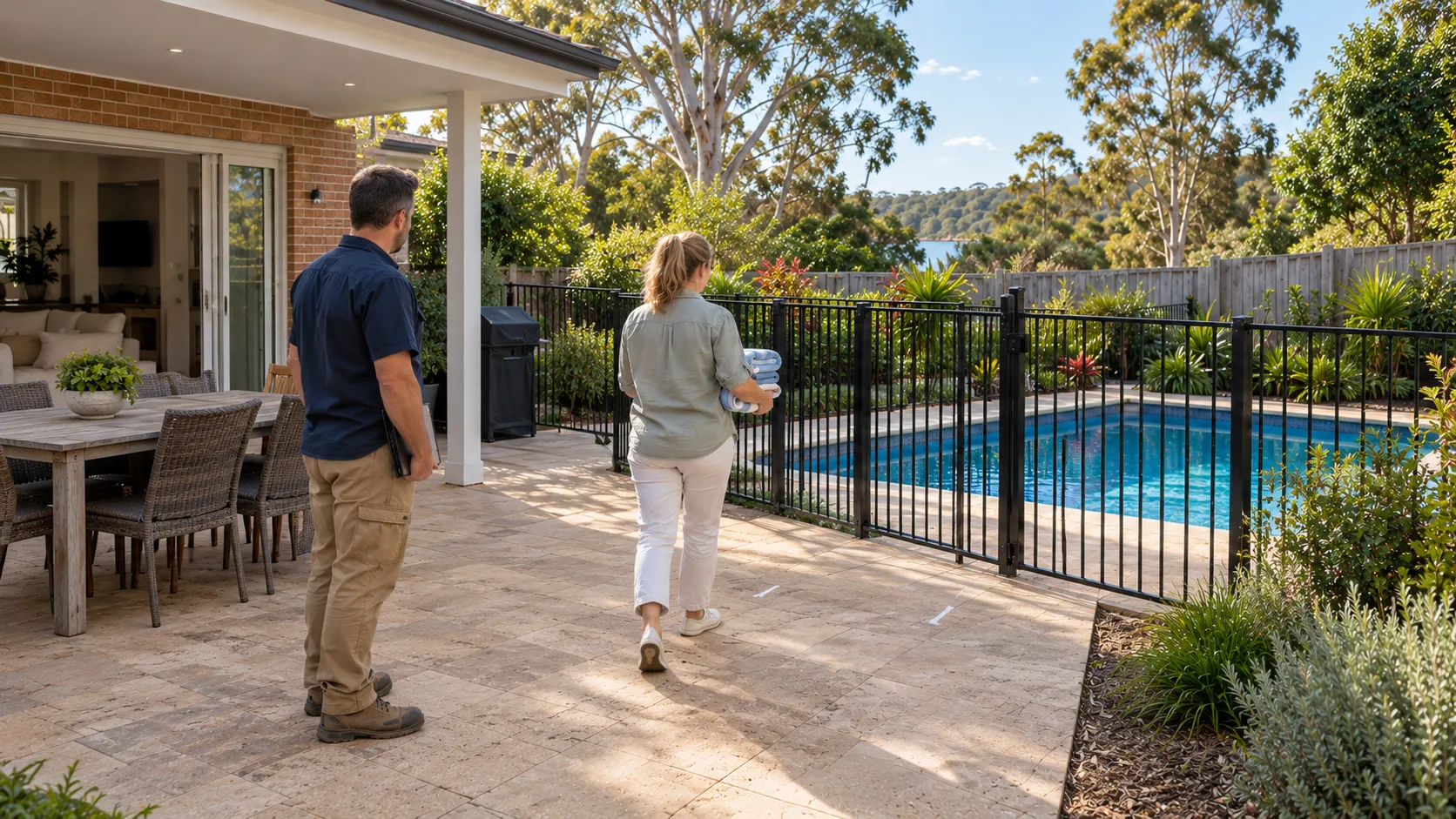
Now picture an afternoon when someone is swimming, others are eating outside and another person is moving between the house and garden. At the central gate, someone leaving the pool might encounter a chair that has been pulled backwards from the table. The short route becomes less convenient if access depends on the dining area remaining clear.
At the alternative location, the walk to the table might be slightly longer, but people could leave the enclosure without interrupting a meal. Trips to the garden may also remain outside the pool area if the surrounding layout allows a separate path.
To compare the options, temporarily mark the proposed gate positions and walk through these routines. Check the route from the house, the approach from the pool and the space needed around nearby furniture. Repeat the exercise with chairs pulled out and doors open. This simple planning exercise can reveal awkward turns and likely obstructions before the final panel arrangement is agreed upon.
The better position is the one that accommodates regular activities with fewer conflicts. A few extra steps may be worthwhile if they preserve a comfortable dining area, but moving the gate away from the table will not help if it creates a difficult turn besides the house door. Share these trade-offs so both locations can be assessed against the actual site conditions.
A pool gate is not simply an opening that can be moved anywhere after the glass layout has been settled. Its location affects the dimensions of adjoining panels, the placement of supports and the space available for installation. The surface beneath the supports and the surrounding structures also need assessment.
Discuss the preferred location before the panel arrangement is finalised. Give the installer both candidate positions and explain the practical reasons for each. This allows the options to be assessed for feasibility, safety and appearance before decisions about individual panels are locked in.
When comparing local suppliers, ask how each proposed layout accounts for walking routes, furniture in use, gate operation and applicable NSW pool barrier requirements. Lake Macquarie Fencing can assess your backyard layout and discuss suitable gate positions for your glass pool fence. Explain the route from the house to the pool, where people gather outdoors and which garden trips should remain outside the enclosure. Addressing these details early establishes a layout that supports use while meeting safety requirements.