


Common Pool Fence Issues That Affect Safety and Compliance
May 28, 2026

When a pool fence is functioning properly, it quietly performs one of the most important safety roles around a property. It helps prevent unsupervised access to the pool area, stands up to daily use and supports ongoing NSW pool safety compliance. However, even well-built barriers can become non-compliant over time due to wear, movement, corrosion, landscaping changes or gate hardware failure. For properties with pool fencing in Newcastle, coastal exposure can make some of these issues develop faster, especially around metal fixings, hinges, posts and panels.
This article looks at the most common pool fence problems that can affect safety and compliance. It explains how different defects compromise the effectiveness of a pool barrier, what warning signs property owners should look for and when repairs, upgrades or replacement may be needed. By understanding these common issues, property owners can maintain a safer pool area and reduce the risk of failed inspections or serious safety concerns.
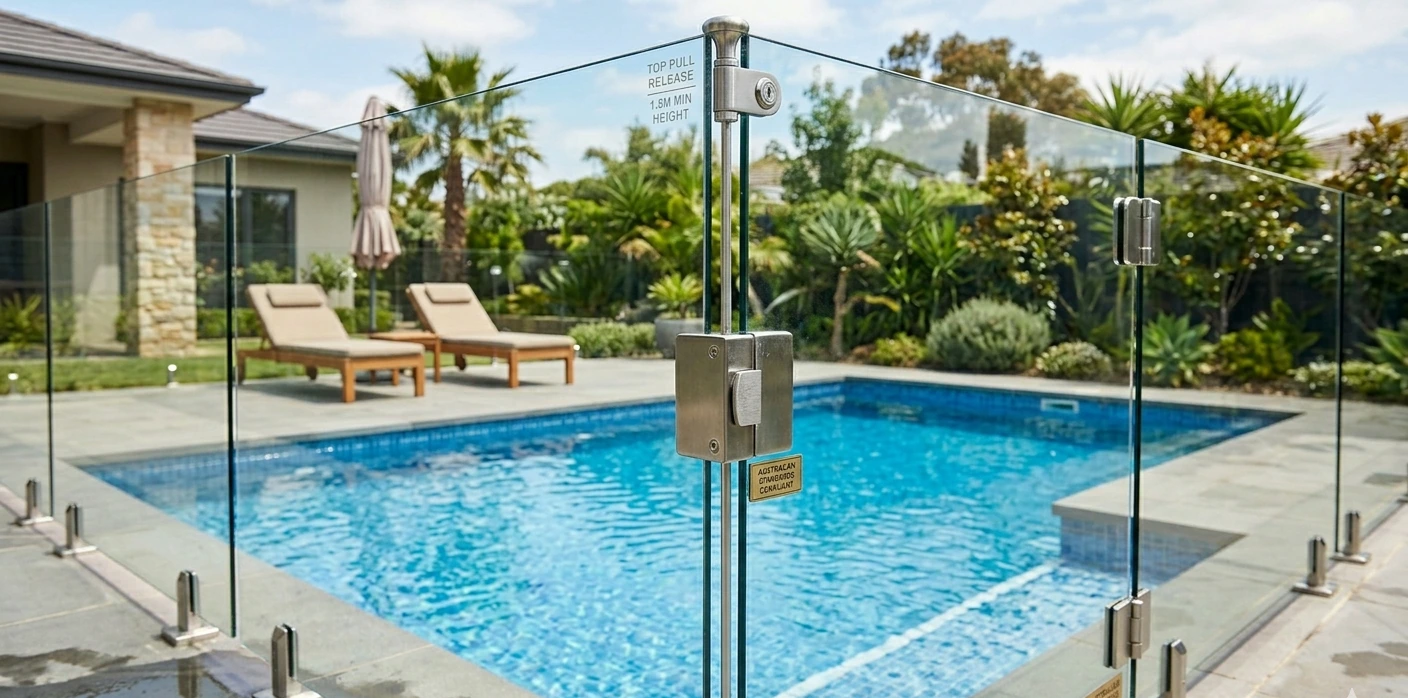
Gate hardware is one of the most common weak points in a pool barrier and one of the first areas checked during a pool safety inspection. A gate that does not self-close and self-latch every time is non-compliant and creates a direct safety risk, especially for young children who may be able to access the pool area through a gate that has not closed properly.
Over time, exposure to salt air, pool chemicals and constant movement can cause latches and hinges to corrode, seize, sag or fall out of alignment. Even small changes, such as a gate needing a push to close or a latch that sticks, should be treated as urgent safety issues rather than minor annoyances.
A compliant pool gate latch must automatically engage every time the gate swings shut and must be positioned so a young child cannot easily operate it. When latches start to fail, the problems are often easy to identify during a careful check. Common issues include a latch that:
In some older installations, the latch may also be fitted too low or become easier to reach because furniture, pot plants or landscaping have been placed underneath it. This can effectively create a step, allowing a child to reach and operate the latch.
Pool gates must self-close from any open position without being pushed. This function relies on correctly adjusted hinges, often spring-loaded or tensioned types designed for pool gates. Common hinge-related problems include:
When hinges are not performing correctly, the gate may look closed even though the latch has not fully engaged. A child bumping the gate or a gust of wind can then cause it to swing open. In some cases, hinge tension can be adjusted with the correct tool, but badly corroded or damaged hinges usually need replacement.
Loose, leaning or visibly damaged pool fence panels are another common reason pool barriers fail safety inspections. Beyond looking worn, these issues can create climbable gaps, weak points or collapse risks that allow young children to access the pool area. Any panel that moves, flexes excessively or sits out of alignment needs prompt attention.
Regular checks of panel stability, fixings and alignment are especially important after strong winds, heavy rain or accidental impact. Early detection may allow for a straightforward repair rather than a full panel or post replacement.
Pool safety laws focus on maintaining a continuous, non-climbable barrier. When a panel becomes loose or starts to lean, it can:
In glass fencing, even slight movement in a panel can indicate failing spigots, loose friction plates or unstable footings. For aluminium or steel fencing, a leaning panel often points to rusted posts, loose brackets or degraded screws. In timber fencing, warping or rotting rails can allow panels to pull away from posts.
Coastal conditions can accelerate wear on pool fence panels. Salt-laden air promotes corrosion of metal components, particularly at the base of posts, around screws and near brackets or spigots. Pools close to the shoreline or exposed to coastal winds are especially prone to rusted hardware and loosening fixings.
Ground movement can also affect the barrier. Sandy or shifting soils may cause posts to tilt, while repeated exposure to strong wind can loosen fixings over time. Chlorinated or saltwater pool splash can further affect metal components if they are not properly rated for pool environments.
Pool owners should visually check panels every few months and after major storms. Useful checks include:
Minor issues may be fixed by tightening or replacing fixings with corrosion-resistant hardware suitable for pool environments. However, post movement, significant leaning, cracked glass, extensive rust or rotted timber usually requires professional assessment.
Gaps under or around a pool fence are a common cause of failed pool safety inspections. Even small openings can allow a child to squeeze through or create a foothold that makes climbing easier.
Gaps often develop over time as ground levels change, paving subsides, soil erodes or landscaping is altered. Properties on sloping, sandy or coastal sites may need more frequent checks because ground movement can affect the barrier more noticeably.
NSW pool fencing requirements set clear limits on openings in pool barriers. A single non-compliant gap can cause the entire barrier to fail inspection. Key requirements include:
These measurements apply around the entire pool enclosure, including corners, gates, side boundaries and any sections where the fence meets walls, retaining structures or landscaping.
Measuring is the most reliable way to identify non-compliant gaps. Visual inspection alone can be misleading because a gap may appear small until it is measured at the lowest point. A practical approach includes:
If gaps are too large, the right repair depends on the cause. Possible solutions may include:
Any repair must be planned carefully so it does not create a new climbable point. For example, raising the ground level or adding a structure beneath the fence may fix one gap but create another compliance issue if it becomes a foothold.
Climbable objects are one of the most common reasons an otherwise compliant pool fence fails inspection. A fence may meet height and spacing requirements, but nearby furniture, plants, equipment or structures can make it easier for a child to climb over.
Pool barriers must be kept clear of climbable objects within the required non-climbable zone. In practical terms, this means regularly checking the area around the fence and removing anything that could act as a step, platform, foothold or handhold.
A climbable object is anything a young child could use to gain extra height or grip near the pool fence. This is not limited to large or obvious items. Examples include:
These items are often moved temporarily for entertaining, gardening or cleaning and then left near the fence. Lightweight furniture and toys are particularly risky because children may be able to drag them into position.
The non-climbable zone must remain clear so the barrier cannot be scaled. Furniture, pots, equipment, branches, retaining walls and decorative features can all cause issues if they sit too close to the pool fence or reduce its effective height.
Decks, steps and retaining walls require particular care. If a raised surface next to the barrier reduces the effective fence height, the barrier may no longer comply. In some cases, additional fencing, glass infill or other modifications may be needed to restore a compliant height and remove climbable points.

Landscaping around a pool can quickly turn from a design feature into a compliance problem. Overgrown plants may create climbable points, hide defects, interfere with gate operation or damage fence panels and posts.
Trees, shrubs and garden features should be planned and maintained with pool safety in mind. Even a small plant can become a problem once it matures, especially if branches grow towards the fence or dense hedging forms a firm surface beside the barrier.
Branches, trunks and dense shrubs can effectively form a ladder beside the fence. Common landscaping issues include:
Vegetation should be trimmed well clear of the fence, gate and latch. New plantings should also allow for mature growth, not just the size of the plant at the time of installation.
Good pool landscaping should support safety rather than compromise it. When designing or updating the area around a pool barrier, consider:
Ongoing maintenance is just as important as the original design. Regular trimming, clearing and inspection help prevent plants from creating climbable points or hiding damage to posts, panels and gate hardware.
Rust, corrosion and worn fixings are common reasons pool fences lose strength over time. Coastal air, pool chemicals and constant moisture can accelerate metal deterioration, particularly around screws, hinges, latch assemblies, brackets, posts and spigots.
While surface rust may appear minor, corrosion can weaken critical connection points. A fence that looks acceptable from a distance may already be compromised at its base plates, fittings or internal post sections.
Corrosion thins metal, weakens fixings and can cause components to fail without much warning. This is especially serious around:
Salt and chlorinated water can sit in small gaps, under fittings and around screw heads. Over time, this can lead to pitting and hidden corrosion that is not immediately visible during a quick inspection.
Fasteners are often overlooked but are critical to the strength of the barrier. Standard mild steel screws or low-quality zinc-plated hardware can corrode quickly in pool and coastal environments. Once screw heads rust or shear, panels may loosen, shift or create unsafe gaps.
Posts and brackets also need close attention. Rust at ground level, around welds or where metal meets concrete can indicate deeper deterioration. If corrosion has weakened the structure, painting over the surface will not fix the problem. The affected hardware or fence section may need replacement.
Older pool fencing can look solid at a glance while failing on important safety and compliance details. Many fences installed more than 10 years ago may no longer meet current expectations or may have deteriorated in ways that create climb points, weak latches, unstable panels or unsafe gaps.
The main question is not whether the fence is still standing. It is whether a child could climb over, squeeze through, crawl under or open the barrier.
Age-related damage often starts subtly and becomes more serious over time. Warning signs include loose posts, rusted fittings, unstable panels, soft timber, cracked glass, worn hinges and gates that no longer close properly.
Timber fencing is prone to rot at the base of posts and along rails where water collects. Metal fencing often develops rust at ground level, around welds and near gate hardware. Glass pool fencing can become unstable if spigots loosen in the concrete or if panels are chipped at the edges.
Any movement in the fence should be taken seriously. Panels that flex, posts that wobble or gates that drag are signs the barrier may no longer be reliable.
Some older pool fences were built to earlier standards or have become non-compliant as the surrounding area has changed. This is common where old boundary fences form part of the pool barrier. Issues to check include:
Older fences may also have lattice inserts, decorative metalwork or horizontal rails that create a ladder effect. Even if these features were acceptable at the time of installation, they may now require modification or replacement.
Gates on older pool fences often stop self-closing or self-latching reliably. This may be caused by worn hinges, sagging posts, stiff latches, corrosion or general movement in the fence structure.
A gate that stays open, bounces off the latch or needs to be pulled shut is a clear sign that attention is needed. Older latches may also be installed too low or may be reachable through nearby gaps. Minor adjustments or hardware upgrades may restore compliance, but long-term movement in posts or foundations may require a more substantial repair.
Maintaining a compliant pool fence involves more than installing a barrier and leaving it unchecked. Gates, latches, hinges, panels, fixings, gaps, landscaping and nearby objects can all affect whether the enclosure remains safe and legally compliant.
Regular inspections help identify small issues before they become serious defects. A sticking latch, loose panel, rusted screw, overgrown branch or widened gap may seem minor, but each one can compromise the barrier’s purpose. For Newcastle properties exposed to coastal conditions, proactive maintenance is especially important.
A well-maintained pool fence remains one of the most important layers of protection around a residential pool. By checking the barrier regularly and addressing problems early, property owners can support safety, reduce compliance risks and help keep the pool area secure over the long term.