


Glass Pool Fencing Ideas for Small Backyards
May 21, 2026

When space is limited in a backyard, every design choice affects how open, functional and comfortable the area feels. In a compact outdoor setting, heavy fencing materials can quickly make the pool zone appear crowded, disconnected and visually restrictive. Glass pool fencing in Newcastle has become a popular solution because it supports safety and compliance while preserving natural light, clear sightlines and a stronger sense of connection throughout the yard. In this article, Lake Macquarie Fencing explores how the right glass fencing layout, hardware and detailing can help small backyards feel larger, lighter and more cohesive instead of boxed in by bulky barriers or oversized structures.
This article explains which types of glass pool fencing work best in compact backyards, how panel placement can maximise usable space and how frameless and semi-frameless systems affect the overall appearance of the yard. It also covers practical design details, gate placement and key compliance considerations under NSW pool safety requirements. By understanding how glass fencing interacts with paving, landscaping, decks and existing structures, homeowners can create a pool area that feels visually spacious while remaining safe, practical and easy to maintain.
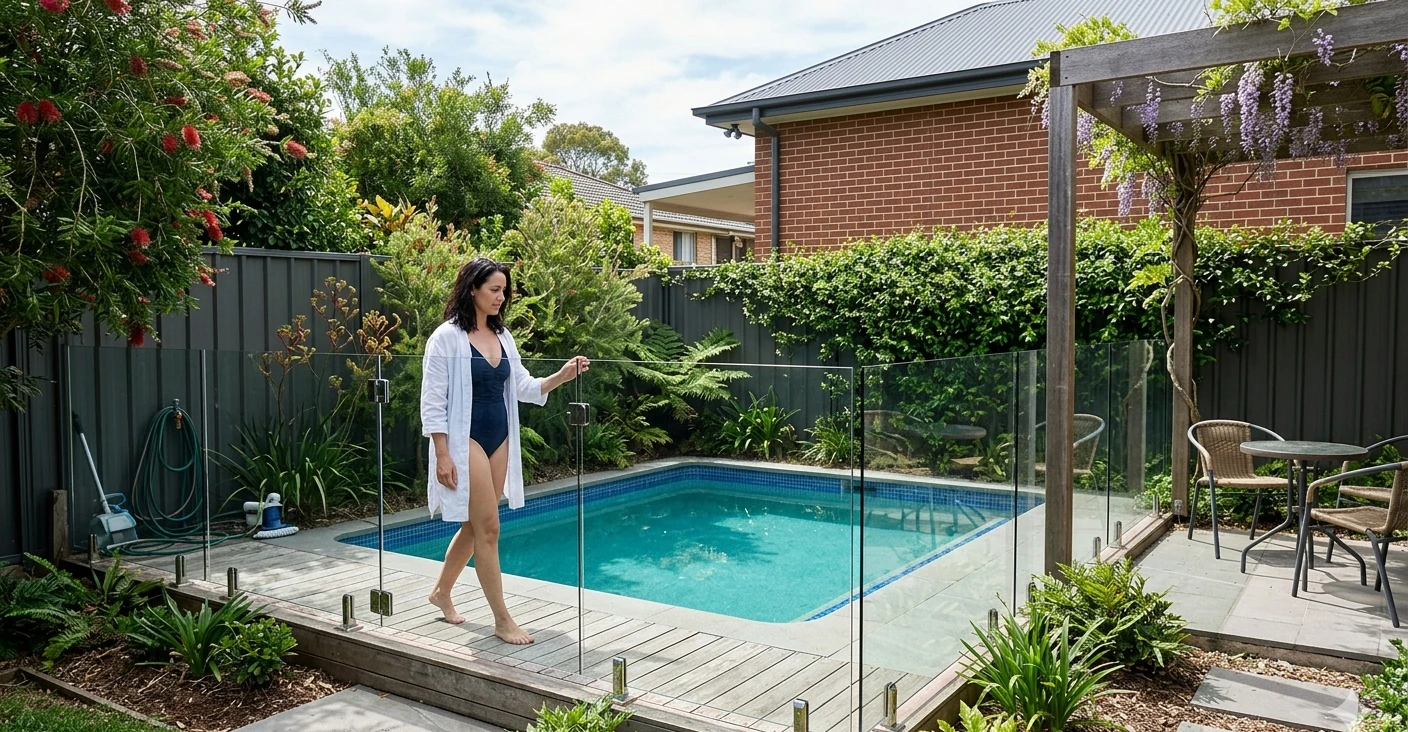
Glass pool fencing suits smaller backyards because it keeps views open and avoids dividing the area into cramped sections. The pool zone can still feel connected to the lawn, deck and outdoor entertaining areas, which is important when every square metre matters. Instead of creating a solid visual barrier around the pool, clear glass allows the whole yard to read as one continuous space.
Glass fencing also provides strong safety and compliance without the bulk of traditional materials. This combination of safety, space efficiency and visual lightness makes it a practical choice, not just an aesthetic upgrade.
Solid timber or metal fencing around a small pool can make the yard feel closed in. Glass panels allow the eye to travel across the pool to the back fence, planting or surrounding landscape, which helps the area feel larger than it is.
Frameless glass provides the cleanest appearance because it minimises visible hardware and keeps lines simple. This is especially useful when the pool sits close to the house, where a heavier fence could darken nearby indoor rooms or make the outdoor area feel boxed in.
In tight courtyards, glass can also help light move through the space. Reflections from the water, paving and panels can brighten the pool area and make the backyard feel more open, even when the footprint is limited.
Small yards often mean the pool is close to living areas. Clear glass fencing allows direct views from the kitchen, alfresco area or lounge to the pool zone, which supports active supervision. There are no solid panels or slats blocking sightlines where children may be playing.
A compliant glass pool fence also includes important safety features such as self-closing, self-latching gates and climb-resistant layouts. These details are especially important when fences sit close to decks, benches, retaining walls or boundary fencing, as nearby surfaces can sometimes create climbable areas if the layout is not planned properly.
The transparency of glass also makes it easier to notice if furniture, toys or pot plants have been moved too close to the fence. This is useful in smaller backyards, where items can easily shift into areas that affect safety or compliance.
Compact backyards often include irregular boundaries, narrow side access, raised decks, retaining walls or sloping ground. Glass pool fencing can be designed to work with these features while keeping the overall look clean and unobtrusive. Panels can align with paving edges, deck lines or garden beds so the fence feels integrated rather than forced into the space.
Because glass has a minimalist appearance, it also pairs well with common finishes such as composite decking, stone paving, concrete surrounds and small areas of turf. The fence remains visually quiet, allowing the pool, landscaping and entertaining areas to stand out without making the yard feel cluttered.
In a compact backyard, the style of glass pool fencing has a noticeable impact on the overall feel of the space. The choice between frameless and semi-frameless glass affects how open the area looks, how much visible structure is introduced and how the fence works with existing paving, landscaping and budget.
Both options can meet Australian pool safety standards when designed and installed correctly. The right choice depends on the layout, desired finish, site conditions and how much visual definition the pool area needs.
Frameless glass uses thick glass panels fixed with discreet stainless steel spigots or channels, with no vertical posts between panels. In smaller backyards, this usually creates the most seamless result because there are fewer visible interruptions across the fence line.
The main benefit is visual openness. Views from the house to the pool and across the garden remain clear, which is helpful when the pool sits close to a boundary, deck or entertaining area. Reflections on the glass can also create a more refined finish and help lift an older or modest backyard design.
Frameless systems usually cost more than semi-frameless options. The glass panels are heavier, the hardware is more specialised and installation often requires more precise groundwork. On properties near the lake or coast, wind exposure and corrosion resistance should also be considered so the fittings are suitable for local conditions.
Semi-frameless glass uses aluminium or stainless steel posts between panels while leaving the top edge of the glass exposed. It still provides a light and contemporary appearance, but the posts give the pool zone more definition.
This option often suits smaller budgets while still keeping the space visually open. It can also be practical where ground levels vary or existing concrete is not perfectly level, as each panel has its own support points. This can be useful in older backyards where patios, paving or slabs may not be completely even.
Visually, semi-frameless glass introduces vertical lines. In a narrow yard, this can help break up a long fence run and connect the pool area with existing balustrades, posts or boundary features. Post colour also matters. Darker finishes such as black or charcoal tend to recede in compact spaces, while bright silver hardware can stand out more.
The decision often comes down to three practical questions:
Frameless glass is usually best where the goal is a clean, high-end look with maximum visual openness. Semi-frameless glass is often the more practical choice where cost control, slight ground irregularities and stronger definition of the pool area are higher priorities.
Small backyards benefit most from glass pool fencing when the layout is planned carefully. The aim is to meet safety requirements without losing valuable space or interrupting the natural flow of the yard. The position of panels, gates and fence lines can make a compact pool feel larger and easier to use.
The fence should work with the shape of the yard rather than fight against it. Aligning glass panels with existing structures, paving, decks and garden beds helps keep walkways clear, furniture usable and maintenance simple.
Freestanding fencing that cuts awkwardly through the yard can waste usable space. A more efficient approach is to run glass panels parallel with existing boundaries, walls or structures so the fence sits where circulation is already limited.
For many homes, this may involve aligning glass with:
This approach keeps the central area of the yard open for seating, movement or play. Where the boundary fence cannot form part of the pool barrier, a glass line installed just inside it can still preserve a clean perimeter without making the space feel crowded.
In a small yard, every corner takes up space and can create awkward areas that are hard to use. Long, straight runs of glass with fewer returns usually make the pool zone feel cleaner and more spacious.
A simple rectangle or L-shaped fence line often works better than trying to follow every curve of the pool. This allows the pool itself to remain the focus while the glass barrier supports a clear and practical layout. On narrow blocks, a straight fence line can also create a consistent walkway between the pool and boundary.
Keeping returns close to structures such as the house wall, deck edge or storage area helps avoid dead pockets that collect leaves and are difficult to clean. The simpler the fence line, the more open the backyard tends to feel.
Gate placement can make the difference between a cramped pool area and one that feels natural to use. In a small backyard, the gate must provide direct access while still meeting pool safety requirements and avoiding conflict with furniture, paths and landscaping.
Good design considers how people move between the house, patio, lawn and pool. The gate should feel obvious and easy to use, while the hardware and swing direction need to support safe, compliant operation.
The gate should usually sit on the most direct path from the main outdoor living area to the pool. This may be the line from the back door to the deck, from an alfresco area to the shallow end or from the main walkway to the pool entry point.
A clear entry point encourages people to use the gate properly instead of reaching over or moving around the fence. It also reduces wear on landscaping by keeping foot traffic to one practical route.
Avoid placing the gate in a tight or hidden corner where people need to squeeze along a narrow strip of paving. A glass gate at the end of a clear sightline helps maintain an open feel and makes supervision easier from the house. In most compact backyards, one well-positioned primary gate is better than adding extra access points that complicate the layout and increase cost.
Pool gates are required to open away from the pool area. In a compact backyard, this has a direct impact on the layout. The gate should not swing across the main walkway from the house or into an area where outdoor furniture, barbeques or planters need to sit.
Before installation, there should be enough clear space for the gate to open freely and close securely. In very tight areas, a narrower compliant glass gate may be more suitable so it does not hit a wall, post or furniture item.
Self-closing hinges must also be adjusted correctly. The gate should close firmly from any open position without being so forceful that it becomes difficult or unsafe for children or older family members to use.
Latch position is an important safety detail in any pool fence, but it matters even more in a small backyard where children may be close to the gate more often. The latch needs to be positioned so it is out of reach of small children and must comply with the relevant pool safety requirements.
Visibility is also important. The gate and latch should be easy to see from the main entertaining area, kitchen window or outdoor seating area so adults can quickly check whether the gate is closed. Avoid placing tall plants, screens or furniture where they block the view of the gate or create climbable areas nearby.
A sleek magnetic latch can work well with glass fencing because it keeps the appearance clean while still supporting safe daily use.
Before any panels are installed, the design, layout and materials need to be checked carefully. This helps avoid expensive changes later and ensures the finished fence suits both the property and the safety requirements.
In Lake Macquarie, Newcastle and across NSW, pool fencing must satisfy strict legal standards. Practical details such as ground levels, gate placement, glass type, hardware quality and access for cleaning also influence how well the fence performs over time.
Glass pool fencing must comply with NSW pool safety laws and the relevant Australian Standards. This includes requirements for barrier height, non-climbable zones, gate operation and safe latch positioning.
These checks can be more difficult in small backyards because the pool surround may also be used for entertaining, seating, landscaping or storage. Furniture, steps, retaining walls, raised garden beds and nearby structures all need to be considered so they do not create climbable areas.
Before installation, the full layout should be assessed, including nearby windows, decks, boundary fencing and any changes in ground level. This helps ensure the fence is designed to pass inspection and remain practical for everyday use.
Not all glass pool fencing products are the same. Panels should be made from toughened safety glass that meets Australian standards, and high-quality hardware is essential for long-term performance. In coastal areas, marine-grade stainless steel fittings are often recommended because they are better suited to salt air and moisture exposure.
The choice between frameless and semi-frameless glass also affects maintenance. Frameless glass creates the most open look, but it can show water spots, fingerprints and pool splash more easily. Semi-frameless systems introduce posts, which may require their own cleaning and maintenance but can make the fence feel more defined.
Before installation, it is worth considering how each panel will be accessed for cleaning, whether a hose connection is nearby and whether trees, garden beds or pool equipment may create extra debris. These practical details help ensure the fence stays attractive and easy to manage after it is installed.
Glass pool fencing is one of the most effective ways to combine safety, compliance and visual openness in a compact backyard. The right layout can make the pool area feel more connected to the rest of the yard, while careful gate placement and suitable hardware can improve everyday use.
Frameless systems offer the cleanest and most uninterrupted appearance, while semi-frameless options provide a practical balance of style, structure and cost control. With a well-planned design, glass pool fencing can help a small backyard feel brighter, more spacious and better suited to daily outdoor living.