


What Is the Best Fence for a Sloping Block?
September 22, 2026

Choosing a fence for a sloping block involves more than selecting a style and arranging installation. Changes in gradient, soil conditions, drainage and existing structures can all affect how the fence needs to be designed and installed. For properties requiring fencing in Newcastle, these factors can determine whether a fence remains stable, provides adequate privacy and follows the contours of the property.
Lake Macquarie Fencing works with a range of options suited to sloping sites, including stepped and raked designs, retaining wall combinations and modular systems. The right approach depends on the property's gradient, chosen material, access conditions and boundary layout, as well as any relevant planning or compliance requirements.
From choosing between stepped and raked fencing to managing drainage, retaining walls, access and fence height, each part of the installation needs to suit the conditions of the block. Material selection and site preparation can also influence the overall cost and long-term performance of the fence.
A sloping block can affect almost every part of fence design and installation. The gradient changes how posts are positioned, how panels follow the ground and how the finished fence connects with retaining walls, driveways and other structures. It can also affect installation costs and the amount of preparation required.
The main considerations include:
Assessing these factors before installation helps determine the most practical system for the site's slope and surrounding conditions.

Two common approaches for fencing a sloping block are stepped and raked fencing. Stepped fencing uses level panels that change height at each post, while raked fencing follows the slope in a continuous line. The right option depends on the gradient, desired appearance, fence material and how the boundary connects with surrounding structures.
Stepped fencing uses level panels that drop down at each post to follow the slope. It can work well where the ground changes noticeably over a relatively short distance and provides a consistent height for each panel.
One consideration is that stepping can leave gaps beneath panels where the ground falls away. These may require plinths, sleepers or other suitable infill depending on the site.
Raked fencing follows the slope, allowing the rails and panels to run at an angle rather than remaining level. It can suit gentle and consistent gradients while reducing gaps beneath the fence.
The top of a raked fence also follows the slope, so its height relative to the surrounding ground changes along the boundary. Not all fencing systems can be raked to the same degree, making the material and design important considerations.
Stepped fencing can be suitable where the slope changes sharply or a more level top line is preferred. Raked fencing can provide a smoother appearance where the gradient is gradual and consistent.
Some properties may require a combination of both approaches, with raked sections along gradual slopes and stepped sections where the gradient becomes steeper or meets a retaining wall.
The right fencing material needs to suit the gradient, installation method and conditions around the property. Some materials are easier to step or rake than others, while moisture, maintenance requirements and the desired appearance can also influence the choice.
For properties, common options include the following:
Colorbond steel can suit sloping blocks where the system allows stepped or raked installation. Its solid profile also provides privacy, making it suitable for residential boundaries where screening is important.
Depending on the design, suitable plinths or other solutions can help manage minor level changes beneath the fence. Keeping the steel clear of prolonged soil and water contact can also support long-term durability.
Timber fencing is flexible and can work well on properties with changing ground levels. Paling fences can be stepped to follow sharper changes in elevation, while suitable systems can also be raked along gradual slopes.
Timber can also be combined with sleepers where minor retaining is required beneath the fence. Moisture management remains important on sloping sites because runoff can increase exposure around posts and the base of the fence.
Aluminium fencing is a lightweight option that can suit sloping properties where airflow, visibility or a more open appearance is preferred. Depending on the product, panels can be stepped or raked to follow the ground.
Tubular and slat designs can also suit gardens, elevated areas and other locations where a less solid appearance is preferred. Where NSW pool fencing requirements apply, the fence must still provide a compliant child-resistant barrier suited to the site.
The most suitable material depends on the gradient, fence design, site conditions and intended use of the boundary. A material that works well on one slope may not be suitable for another.
A fence on a sloping block needs to work with the ground rather than simply sit on top of it. Changes in level can affect whether retaining is required, how gaps beneath the fence are managed and how the fence connects with existing structures.
Where a difference in ground level needs to be supported, a retaining wall may be required before the fence is installed. A fence should not be relied on to hold back soil where a dedicated retaining structure is needed.
Smaller level changes may be managed with stepped panels and suitable plinths, while larger changes may require a separate retaining system. The relationship between retaining and fencing should also be considered when checking applicable planning requirements.
Stepped fencing can create gaps beneath panels where the ground falls away. Depending on the site, these may be managed with:
The chosen solution should still allow necessary water movement rather than completely blocking natural drainage along the boundary.
Pools, sheds, paving, landscaping, retaining walls and drainage infrastructure can all affect where fence posts can be positioned. These features should be identified before installation, where excavation could affect an existing structure.
Where several site constraints occur together, a site assessment can help determine the most practical fence layout and installation method.
A fence around 1.8 metres high is commonly used for residential boundaries, but the appropriate height on a sloping block depends on the property's gradient, ground levels and privacy requirements. A gentle slope may allow a consistent fence height, while steeper sections may require stepped panels, raked fencing or retaining to maintain a practical boundary.
Property owners should also check whether they need council approval for a fence in NSW, as height, location, retaining walls and sloping ground can affect the requirements that apply.
Fence height should be assessed against the actual ground levels along the boundary. A fence can appear different in height from the higher and lower sides of a slope, where retaining walls are involved. Increasing the fence height is not always the best solution for privacy, as targeted screening may provide better coverage without creating an unnecessarily tall boundary.
Before finalising the height and design, property owners should check the NSW exempt development requirements for fences, as the applicable standards can depend on the fence’s location, height, materials and surrounding land.
Drainage is important when installing a fence on sloping ground because rainwater flows downhill and can collect around posts, footings or retaining walls. Poorly managed runoff can soften soil, cause erosion and reduce the stability of fence posts. The fence design should therefore work with the site's existing water flow rather than blocking or concentrating runoff.
Drainage needs can vary with the slope, soil conditions, existing stormwater systems and nearby retaining walls. Stepped fencing may leave gaps beneath panels that need to be managed without blocking natural water movement, while solid fencing can affect how surface water travels along the boundary.
Where fencing is installed near a retaining wall, drainage should be considered without compromising the wall or its existing drainage system. Areas already affected by erosion or poor drainage may need to be addressed before fencing begins.
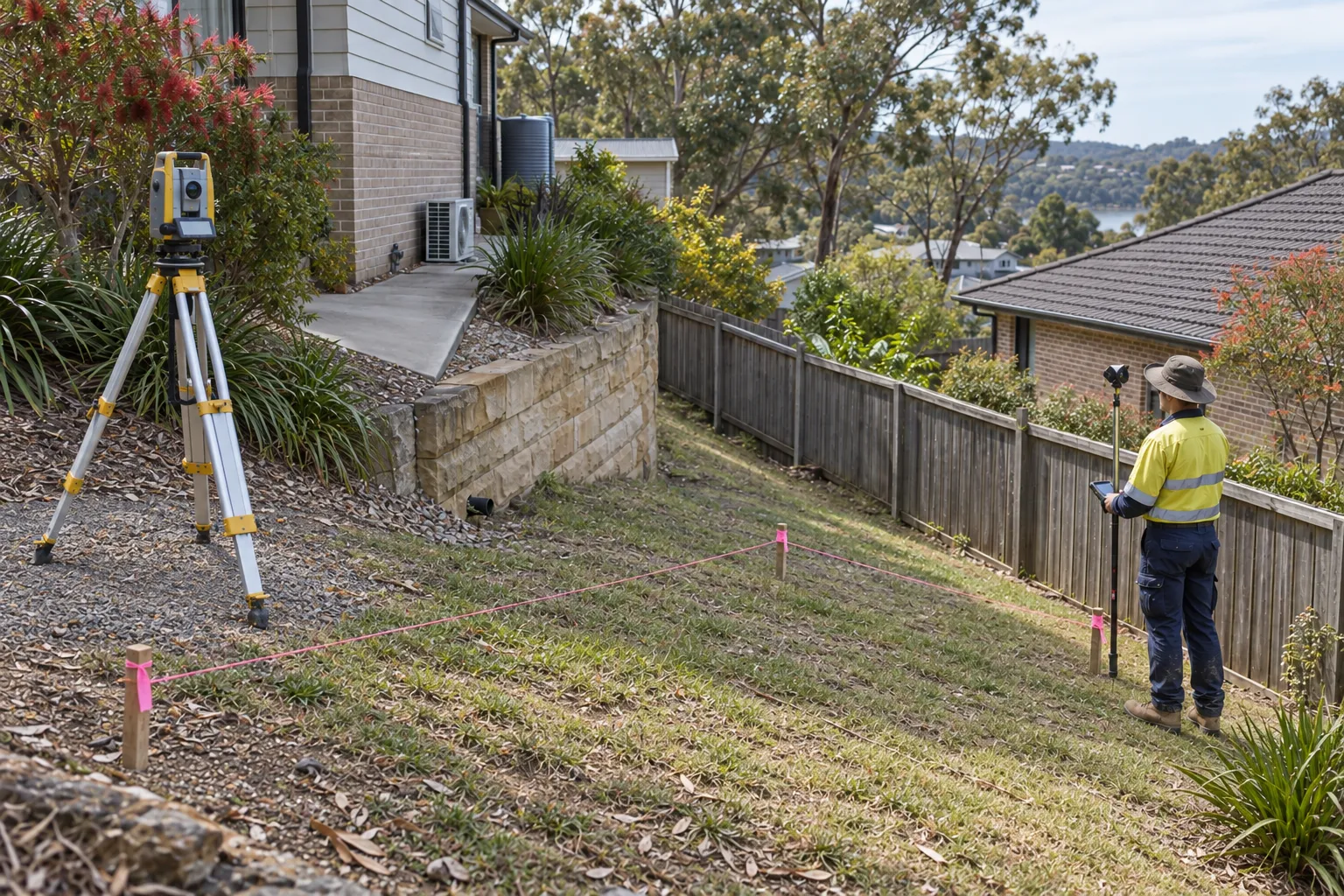
A fence can be installed along a property boundary on a sloping block, but the boundary position and changes in ground level need to be established before installation. The fence may need to use stepped or raked sections to follow the slope while maintaining a practical boundary line.
An existing fence should not automatically be assumed to mark the legal boundary, particularly where the ground has been altered by retaining, landscaping or previous construction. Where the boundary is uncertain or disputed, a registered surveyor may be needed to confirm its position before posts or retaining structures are installed.
Different ground levels, retaining walls, drainage, easements and other site constraints can also affect how closely the fence can follow the boundary. Where soil needs to be retained, a separate retaining solution may be required rather than relying on the fence to hold back the ground.
The cost of fencing a sloping block depends on more than the length and material of the fence. The gradient, ground conditions, access and amount of preparation required can all affect the final price. A gentle slope may need only minor adjustments, while a steeper site may require stepped sections, custom panels, retaining or drainage work.
The main factors that can affect sloping block fencing costs include:
Because sloping properties can have very different installation requirements, the most accurate cost comes from assessing the fence length, gradient, access, ground conditions and any retaining or drainage work together. A site-specific quote can then account for the materials, preparation and labour required for the property.
Property owners can also consider practical ways to reduce fencing costs without compromising quality, including comparing suitable materials and addressing site-access issues before installation.
Access can affect how easily a fence can be installed on a sloping block. Narrow side passages, steep driveways, stairs, retaining walls and established landscaping can make it harder to move materials, position equipment and safely excavate post holes. These conditions can also increase installation time and labour requirements.
Narrow passages can make it difficult to move long fence panels, posts and retaining materials to the boundary. Where vehicle access is limited, materials may need to be carried manually or delivered in smaller sections. Modular or shorter fencing sections may be easier to handle where the site and fence design allow.
Steep driveways and uneven terrain can limit where vehicles, trailers and excavation equipment can operate safely. Materials and equipment may need to be moved from an accessible point to the fence line, where the boundary is below or above the main access area.
Gardens, trees, paving, sheds, pools and retaining walls can restrict access to parts of the boundary. The fence may need to be installed around these features without damaging existing structures or disturbing established landscaping. Excavation near foundations, retaining walls or paved areas also requires careful planning.
The type of fencing can affect how easily materials and equipment can reach the site. Heavy retaining sleepers, concrete and long steel sections can be more difficult to handle on steep or confined blocks than lighter or modular fencing components. Where machinery cannot reach the boundary, additional manual handling may be required.
Access should be assessed before the fencing system is selected and installation begins. A site inspection can identify restricted areas, determine how materials will reach the fence line and establish whether additional preparation or a different installation method is needed.
Professional installation is useful when a sloping block has changes in level, difficult access, retaining requirements or complex ground conditions. While a gentle slope may suit a straightforward stepped or raked fence, more challenging sites require careful planning to ensure the fence remains stable and follows the property correctly.
Steep gradients, rock, loose fill, reactive clay, erosion or changes in level can make post-placement and footing preparation more difficult. Professional installation allows these conditions to be considered when setting out the fence and determining the appropriate installation method.
Where soil needs to be supported or drainage affects the fence line, the fencing needs to be coordinated with the surrounding ground and structures. A fence should not be relied on to retain significant amounts of soil and drainage should be managed without undermining posts or retaining structures.
Narrow access, steep driveways, neighbouring properties at different levels or uncertainty about the boundary can all require additional planning before installation. Where the legal boundary is uncertain, a registered surveyor may be needed before construction.
Some properties require a combination of stepped and raked sections, custom post lengths or different panel configurations to follow changes in level. Professional installation allows the fence to be measured and designed around the actual contours of the property rather than forcing a standard configuration to fit.
A site assessment is useful where several of these conditions occur together. Identifying the requirements before construction allows the fencing system, footing method and installation process to be planned around the property.
Choosing a fence for a sloping block requires careful consideration of the site's gradient, drainage, soil conditions, access and existing structures. Stepped and raked fencing, suitable materials and retaining solutions can each provide effective results when matched to the conditions of the property. Planning these factors early can help avoid uneven gaps, unstable posts, drainage problems and unnecessary installation costs.
Lake Macquarie Fencing can assess the contours and conditions of a property to help determine a practical fencing solution for sloping ground. With the right design, materials and installation approach, a fence can follow the landscape neatly while providing the privacy, security and durability needed for a property.