


When Should Pool Fencing Be Installed During a Pool Build?
August 26, 2026

Timing pool fencing correctly is an important part of any new pool project. Lake Macquarie Fencing understands that installing a barrier at the wrong stage can interfere with excavation, concreting, drainage or landscaping, while leaving it too late can delay final compliance and pool handover.
For homeowners considering pool fencing in Newcastle, planning the fence from the beginning helps coordinate trades, protect finished surfaces and reduce the risk of costly rework. Fence layout, temporary barriers, finished ground levels, landscaping and drainage all need to be considered alongside NSW pool safety requirements.
The best approach is to plan the barrier during the pool design stage, use temporary fencing when required during construction and schedule the permanent fence once the surrounding works are sufficiently complete for an accurate installation and final compliance check.
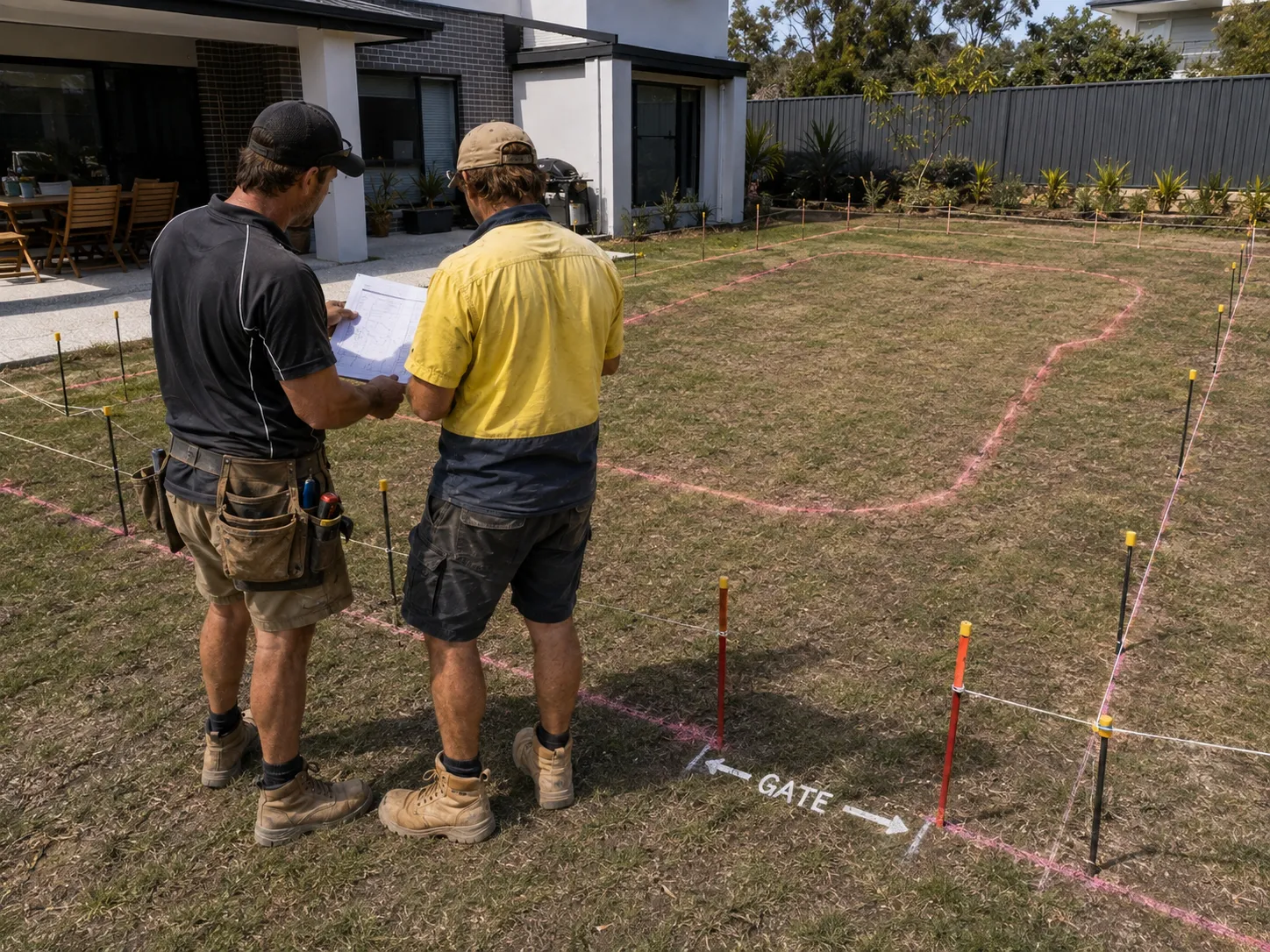
Pool fencing should be considered during the initial pool design rather than after excavation or landscaping has started. Early planning allows the fence line, gate positions, materials, footings and access points to be coordinated with the pool, paving, drainage and surrounding structures.
This is important on sloping blocks, properties with retaining walls or sites with limited space. Changes to finished ground levels or nearby structures can affect the fence's height, clearances and non-climbable areas. Establishing the layout early gives the pool builder, landscaper and fencing contractor a common reference point.
Determine where the barrier will sit in relation to the pool, house and existing boundary fences. If an existing boundary fence is intended to form part of the pool barrier, it needs to satisfy the applicable pool safety requirements rather than simply being treated as an ordinary dividing fence.
Gate positions should provide practical access without conflicting with paths, steps, retaining walls or other structures. Space should also be allowed for the gate to operate correctly, including its self-closing and self-latching mechanisms.
Garden beds, retaining walls, steps, pool equipment and other nearby features can affect the required non-climbable areas around the barrier. Identifying these during the design stage makes it easier to relocate or redesign features before construction begins.
The fence should be planned around the final height of paving, turf, soil and other surrounding surfaces rather than temporary construction levels. This is important on sloping properties, where elevation changes can affect fence height and clearances.
Posts, spigots and channels should be coordinated with concrete slabs, paving, reinforcement, drainage, pool plumbing and electrical services. Confirming fixing locations early can help prevent unnecessary drilling, cutting or damage to completed work.
The proposed fence line should be confirmed before excavation, paving and landscaping begin. Its position needs to work with the pool layout, property boundaries, finished levels and surrounding structures while meeting applicable pool safety requirements.
Homeowners should review the applicable Lake Macquarie pool fencing requirements before finalising the barrier layout, gate positions and surrounding finished levels.
Reviewing the applicable Newcastle pool fencing laws and compliance requirements early can help identify issues involving fence height, gates, boundary barriers and non-climbable areas before construction begins.
Boundary fences require particular attention where they form part of the pool barrier. An existing fence may need modifications, while retaining walls, steps, garden beds or structures near either side can affect compliance.
Before construction begins, confirm the:
Resolving these details early reduces the risk of relocating the fence after surrounding work has been completed and can help determine whether an existing boundary fence or a separate pool barrier is the better solution.
Temporary pool fencing protects while the pool is being excavated or constructed and before the permanent barrier is ready. Pool safety requirements can apply once the pool area reaches the relevant stage where it can hold 300 mm or more of water, including where water can collect in an excavation. The specific requirements should be confirmed for the project.
The temporary barrier should remain in place whenever the permanent fence is unavailable or does not provide the required separation, including during construction and periods when the pool contains water for testing, curing, cleaning or commissioning. It should also be checked after heavy rain, strong winds or significant site activity.
Once the surrounding works are sufficiently complete, the temporary barrier can be replaced with the permanent fence. This keeps the pool area secure while reducing the risk of exposing the permanent fencing to unnecessary construction damage.
Gates, posts and fixing points should be considered well before permanent fencing is installed. Their locations can affect paving, concrete, drainage, retaining walls and access, so leaving these decisions until the final stage can lead to unnecessary drilling, cutting or rework.
The fencing contractor should have accurate information about plumbing, electrical services, drainage, concrete slab thickness and reinforcement.
The final set-out should be based on the finished site wherever possible. This helps ensure the completed barrier achieves the required height and clearances without interfering with other parts of the pool area.
Landscaping and drainage should be coordinated with permanent fence installation because garden beds, retaining walls, turf, paving and changes in ground levels can affect fence height, gaps and nearby climbable features. Accurate finished levels are important on sloping properties.
Before installation, the fencing contractor should know the final locations of paving, garden beds, retaining walls, drainage channels and underground services. Major earthworks should also be substantially complete so machinery does not damage panels or disturb newly installed posts.
Completing these works in the correct sequence helps create a cleaner installation while reducing the risk of movement, damage or compliance problems after the fence is installed.
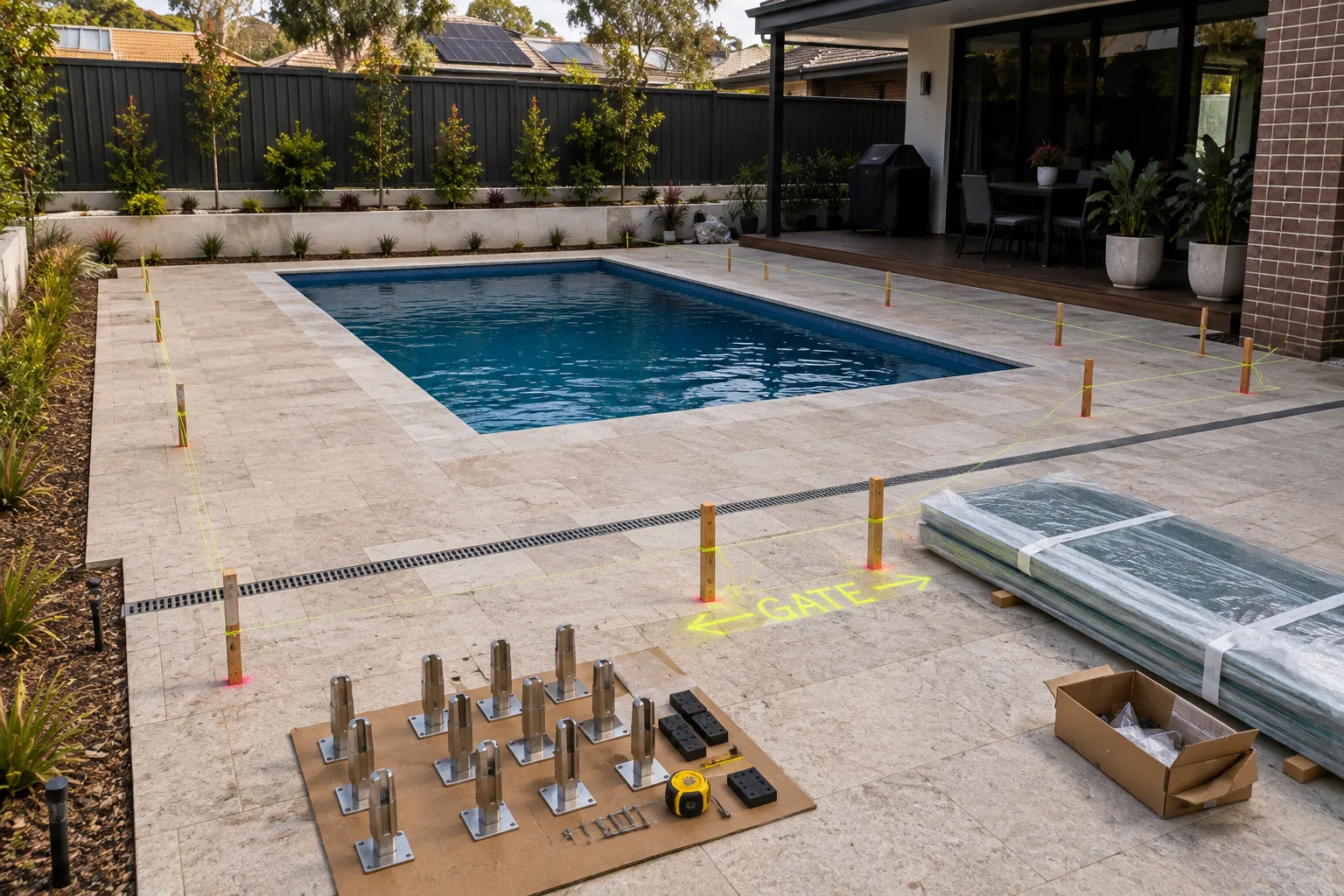
Permanent pool fencing should be installed once the surrounding paving, landscaping and finished ground levels are established. Installing it too early can create problems if later work changes the surface height beneath or around the barrier.
Before the fence is installed, check the:
The ground should also be stable and adequately prepared before posts or fixings are installed. Settlement can affect fence alignment, create gaps or prevent a gate from closing and latching correctly.
Completing major paving, landscaping and other messy construction work first also helps protect the finished fence from concrete splatter, grout, machinery and accidental impact. This is relevant to glass fencing, which can be vulnerable to damage during cutting, grinding and material movement.
Permanent pool fencing should be installed after the major construction, drainage, paving and landscaping works are complete, while leaving enough time for adjustments and compliance checks before handover.
The exact sequence can vary depending on the fencing system and site. Some posts, spigots or channels may need to be installed before final surface finishes, but this should be based on accurate measurements that account for the finished levels.
Glass fencing requires particular care. Where practical, heavy cutting, grinding, concreting and machinery work should be completed before the glass panels are installed to reduce the risk of scratches, chips or impact damage.
Homeowners should understand the site preparation, mounting and compliance considerations before installing glass pool fencing, particularly where paving, decking or landscaping is still being completed.
Once the fence is installed, allow time to check the gates, fixings, fence height, gaps and surrounding landscaping before the final compliance inspection.
Permanent fencing can be delayed when the site is not ready or when design and material requirements have not been confirmed early enough. Here are some of its causes:
Wet weather can also delay paving, landscaping or other work needed to establish stable finished levels. Engaging the fencing contractor early, while scheduling the actual installation at the appropriate construction stage, can help minimise delays and leave time for final adjustments.
The final stages of a pool build are when small oversights can become compliance problems. Changes to paving, landscaping, drainage or ground levels can affect a fence that was correctly installed earlier, while poorly adjusted gates or nearby climbable objects can create issues during inspection.
Before handover, the completed barrier should be checked against the finished pool area. Vital points include:
A final walk-through allows the pool builder and fencing contractor to address problems before the formal inspection rather than discovering them at the last stage.
Before a new pool can be used, its barrier and access points need to meet the applicable NSW pool safety requirements. The completed pool area is assessed as a whole, including the fence, gate, surrounding ground levels and features that could affect the barrier.
Australian Standards provide guidance for the design, construction and maintenance of pool safety barriers, including non-climbable zones and gate components. The applicable version should be confirmed with the council or principal certifier.
The inspection should be arranged after permanent fencing and the works affecting the barrier are complete.
Allowing a short period between fence installation and the formal inspection provides time for minor adjustments or rectification. This is useful if paving, landscaping or gate hardware needs a final adjustment.
Once the required compliance process has been completed and the necessary certificate or approval has been obtained, the pool can proceed to handover and use in accordance with NSW requirements.
Getting the timing right for pool fencing is an important part of creating a safe, compliant and well-coordinated pool area. Planning the barrier during the design stage, maintaining appropriate temporary fencing during construction and coordinating permanent installation with paving, landscaping, drainage and finished ground levels can reduce unnecessary delays and rework.
Lake Macquarie Fencing helps plan these considerations as part of their pool fencing project, from fence layout and fixing points through to permanent installation. Allowing enough time for final adjustments and compliance checks can help ensure the completed barrier is ready for inspection and complements the finished pool area.